Flying Eagle Cents
Flying Eagle Cents (1856-1858)
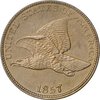
The Flying Eagle cent holds a distinguished place in American numismatic history as the nation's first small cent. Minted for just three years from 1856 to 1858, these remarkable coins represent a pivotal transition in U.S. coinage. The obverse features a unique design of an eagle in flight while the reverse showcases a decorative wreath encircling "ONE CENT."
These historic pieces bridge the gap between the larger copper cents of early America and modern small cents that followed. Highly sought after by collectors for their scarcity, distinctive design, and historical significance, Flying Eagle cents offer both beginning and advanced numismatists an exciting and challenging collecting opportunity.
Origin & History
The Flying Eagle cent arose from practical necessity in the mid-1850s. By this time, the large cents in circulation since 1793 had become increasingly unpopular. Rising copper prices made production unprofitable, and their considerable size—nearly that of a half-dollar—proved cumbersome for everyday transactions. In 1854, Mint Director James Snowden proposed introducing smaller bronze cents to reduce production costs and create a more convenient denomination.
The new design was created by James Barton Longacre, the Mint's Chief Engraver, who borrowed design elements from previous American coinage. The obverse employed an eagle in flight adapted from Christian Gobrecht's silver dollar patterns from 1836-1839, while the reverse wreath had previously appeared on Longacre's designs for gold coins.
In 1856, pattern coins were struck to gain public and political acceptance of the new design. These patterns were distributed to members of Congress, President Franklin Pierce, and influential citizens. Though approximately 2,000 were produced, the 1856 Flying Eagle cent was not officially authorized for circulation, making it a highly prized rarity today. Following passage of the Coinage Act of February 21, 1857, which authorized the small cent and discontinued the large cent and half cent, regular production commenced with both 1857 and 1858 issues.
Design Elements
The Flying Eagle cent showcases an elegant and distinctly American design. Both obverse and reverse layouts were adapted from previously used motifs, creating a coin that retained familiar elements while introducing a bold new format.
On the obverse, an eagle soars leftward with wings outstretched in mid-flight, conveying motion and national strength. "UNITED STATES OF AMERICA" arcs around the upper perimeter, while the date is positioned below the eagle. The design presents fine details in the eagle's feathers, head, and talons, demonstrating Longacre's artistic skill despite the coin's small size.
The reverse design features:
- Agricultural Wreath: An intricate agricultural wreath composed of wheat, corn, cotton, and tobacco—representing the major exports of both Northern and Southern states at the time.
- Denomination: The words "ONE CENT" appear prominently in the center of the wreath.
- Composition: The coins were struck in an alloy of 88% copper and 12% nickel, giving them a distinctive lighter appearance than the previous pure copper cents.
- Edge: Plain (smooth) with no reeding or lettering.
- Diameter: 19mm, significantly smaller than the previous large cents.
Design variations occurred during the brief minting period, most notably in the 1858 issues with Large Letters and Small Letters varieties, which collectors often pursue as distinct types.
Varieties & Key Dates
The Flying Eagle cent series, though brief, offers several important varieties and key dates that captivate serious collectors. The most significant pieces include:
1856 Flying Eagle Cent – The undisputed king of the series, these pattern coins were not intended for circulation but to showcase the new design to legislators and influential citizens. It is difficult to determine exactly how many 1856-dated Flying Eagle cents were struck. At least 634 were given to politicians and other well-connected people, with additional restrikes produced in 1858-1859 using the original dies. In any condition, these coins command premium prices, with even worn specimens valued at several thousand dollars and pristine examples reaching six figures.
1857 Flying Eagle Cent – The first year of regular production, these coins were eagerly sought by the public when released. The 1857 Flying Eagle cents were put up in small cloth bags containing $5 face value (500 coins) each, with special booths set up at the Philadelphia Mint for distribution. Several varieties exist, including clashed dies and minor variations. While more common than the 1856 issue, high-grade specimens remain scarce.
1858 Large Letters – The 1858 Flying Eagle pennies with large letters were minted before those with smaller letters. On these coins, the A and M in AMERICA touch each other with no space between them. This variety is moderately scarce and highly collectible.
1858 Small Letters – Created when the Mint adjusted the design to address striking difficulties, the Small Letters variety shows clearer spacing between letters and slightly different proportions.
1858/7 Overdate – Unknown to numismatists for decades, this overdate first came to light in the 1950s. The result of the Mint's cost-saving practice of reusing dies from previous years, this rare variety shows traces of a 7 under the final 8 in the date.
Several other minor varieties exist, including doubled dies and clash marks, offering specialists a rich field for study and collection.
Collecting Insights
Assembling a collection of Flying Eagle cents presents both challenges and rewards for numismatists. When evaluating these historic coins, consider these important factors:
Striking Quality – Trouble developed with striking the Flying Eagle design, as the head, upper wing tip, and tail of the eagle would often be weakly impressed. This inherent weakness makes well-struck specimens particularly desirable. When examining potential purchases, pay special attention to these areas for evidence of strong, complete details.
Grading Considerations – Flying Eagle cents are graded on the standard Sheldon scale from 1-70. Due to their age and striking challenges, truly high-grade examples (MS65 and above) are exceedingly rare and command significant premiums. For most collectors, attractive VF to AU examples offer the best value, displaying substantial detail while remaining relatively attainable.
Authentication – Given their value, Flying Eagle cents are frequently counterfeited. Working with reputable dealers like L&C Coins ensures you receive authentic specimens properly graded according to industry standards. For valuable pieces, consider examples certified by PCGS, NGC, or other respected grading services.
For a complete type set, collectors typically seek one example each of the 1857, 1858 Large Letters, and 1858 Small Letters varieties. The 1856 pattern remains an aspirational piece for most collectors, though more advanced numismatists might pursue this crown jewel of the series. Browse L&C Coins' inventory of authenticated Flying Eagle cents to add these historic treasures to your collection today.
Frequently Asked Questions
Why was the Flying Eagle cent produced for only three years?
Despite the coin's popularity, its design created striking difficulties at the Mint. The eagle's head, wing tips, and tail often failed to strike up properly against the dense wreath on the reverse. These production challenges led to its replacement by the Indian Head cent in 1859, which featured a design more suitable for mass production.
How many 1856 Flying Eagle cents were produced?
The exact mintage is uncertain, but numismatic research suggests approximately 2,000 pieces were struck, including both original 1856 issues and restrikes made in 1858-1859. This limited production makes the 1856 Flying Eagle cent one of the most coveted U.S. coins.
What is the composition of Flying Eagle cents?
Flying Eagle cents were composed of 88% copper and 12% nickel, giving them a distinctive lighter color than the previous pure copper large cents. This alloy was sometimes called "white cent" or "nicks" by the public due to its nickel content.
How can I tell the difference between 1858 Large Letters and Small Letters varieties?
On the Large Letters variety, the A and M in AMERICA touch each other with no space between them. The Small Letters variety shows clear spacing between all letters and generally appears more refined.
What is the most valuable Flying Eagle cent ever sold?
The most valuable Flying Eagle cents are finest-known 1856 specimens in gem condition. Several examples have sold for hundreds of thousands of dollars at auction, with pristine proof specimens commanding the highest prices.
Are Flying Eagle cents a good investment?
While L&C Coins does not provide investment advice, Flying Eagle cents have historically maintained strong collector demand due to their historical significance, brief minting period, and distinctive design. Their established place in American numismatic history makes them perennially desirable.
Discover Quality, History-Rich Coins at L&C Coins
L&C Coins is a family-owned and operated business founded by coin enthusiast Lee Crane. Since 1974, we've offered our loyal customers a diverse selection of authentic and rare coins at a variety of price points to suit collectors of all levels.
In addition to a history-rich collection of both certified and uncertified coins, you'll enjoy free shipping with every standard order and free express shipping for orders of $25 or more. Should you have any questions, don't hesitate to contact our team of experts — we're here to help.