American Innovation Dollars
American Innovation Dollars: Complete Collector's Guide
American Innovation Dollars represent one of the newest and most exciting collectible series in modern U.S. numismatics. Launched in 2018, this multi-year program celebrates American ingenuity with distinctive designs honoring innovations and innovators from each state, territory, and the District of Columbia.
With their unique edge lettering, specialized reverse designs, and limited mintage figures, these American Innovation Dollars have quickly attracted collectors seeking contemporary coins with historical significance. Whether building a complete set or focusing on specific states, these coins offer affordable entry points for new collectors while providing seasoned numismatists with interesting varieties and error coins worth hunting.
Origin & History
The American Innovation $1 Coin Program was established through the American Innovation $1 Coin Act (Public Law 115-197), signed by President Donald Trump on July 20, 2018. This 14-year initiative (2018-2032) was designed as a successor to the highly successful Presidential $1 Coin Program and the Native American $1 Coin Program, continuing the tradition of educational collecting programs that began with the 50 State Quarters.
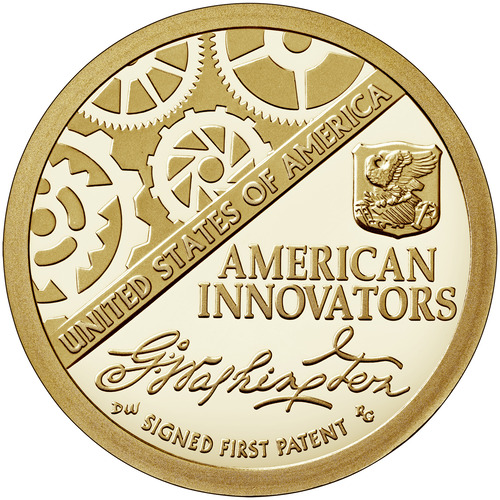
The legislation mandated the release of four new designs annually, each commemorating innovations or innovators from a specific state or territory. The coins are released in the order states joined the Union or territories were established. The series began with an introductory coin in 2018 featuring the signature of President George Washington on a Patent Office design, followed by the first four state coins in 2019: Delaware, Pennsylvania, New Jersey, and Georgia.
Unlike circulating coins, American Innovation Dollars are struck exclusively for collectors and not released into general circulation. The U.S. Mint produces them in various finishes including uncirculated, proof, reverse proof, and enhanced uncirculated, with both Philadelphia (P) and Denver (D) mint marks represented. This decision to limit circulation has made them particularly interesting to collectors who appreciate modern commemoratives with historical significance.
Design Elements
The obverse design, consistent throughout the series, features a dramatic rendition of the Statue of Liberty extending to the edge of the coin. This bold, contemporary interpretation shows Liberty's torch reaching to the edge of the design field, symbolizing how American innovations have expanded beyond our borders to impact the world. The obverse was designed by Justin Kunz and sculpted by Phebe Hemphill.
Inscriptions include ""IN GOD WE TRUST"" and ""$1"" on the obverse, while the year of minting appears on the edge of the coin alongside ""E PLURIBUS UNUM"" and the mint mark. The reverse designs change with each release, featuring unique artwork representing significant innovations from each state or territory:
- 2018: Introductory coin featuring George Washington's signature and a stylized representation of gears, symbolizing industry and innovation
- 2019: Delaware (astronomer Annie Jump Cannon), Pennsylvania (polio vaccine), New Jersey (light bulb), and Georgia (agricultural innovation)
- 2020: Connecticut (Gerber variable scale), Massachusetts (telephone), Maryland (Hubble Space Telescope), and South Carolina (Septima Clark's citizenship schools)
- 2021: New Hampshire (first home video game console), Virginia (engineering innovations), New York (Erie Canal), and North Carolina (University of North Carolina at Chapel Hill)
- 2022: Rhode Island (yacht design innovation), Vermont (snowboarding), Kentucky (bluegrass music), and Tennessee (Tennessee Valley Authority)
- 2023: Ohio (Underground Railroad), Louisiana (Higgins Boat), Indiana (automobile advancements), and Mississippi (blues music)
- 2024: Illinois (steel plow), Alabama (Saturn V rocket), Maine (shipbuilding), and Missouri (conservation)
- 2025: Arkansas (rice cultivation), Michigan (automobile assembly line), Florida (human flight training), and Texas (semiconductor technology)
Each reverse design undergoes rigorous review by the Citizens Coinage Advisory Committee and the U.S. Commission of Fine Arts before final approval by the Secretary of the Treasury.
Varieties & Key Dates
Among American Innovation Dollars, several varieties and key dates have already emerged as particularly desirable to collectors. The 2018 Introductory coin holds special significance as the inaugural issue, especially in proof condition. The Philadelphia (P) mint version had a relatively low mintage of 2,979,566, while the Denver (D) mint struck 5,477,160 coins. Proof versions were even more limited with only 235,033 pieces produced.
Position A and Position B edge lettering varieties exist for many issues. Position A has the edge lettering reading upside down when the obverse faces up, while Position B has the lettering reading normally when the obverse faces up. These variations aren't errors but rather production differences that add collecting complexity. However, several error coins have been discovered, including:
- 2019-P Delaware dollars with doubled die reverses showing doubling on the stars
- 2019-P Pennsylvania dollars with die clashes
- 2020-P Connecticut dollars with rotated dies (misaligned obverse and reverse)
- 2021-P New Hampshire dollars with missing edge lettering
The proof and reverse proof issues from annual sets command premium prices, particularly the 2019-S Reverse Proof set with a mintage of just 74,880 sets. For serious collectors, the 2020 Connecticut Innovation Dollar is particularly noteworthy, as it features the first design using a specialized minting technique that creates a gear-like pattern in the background. This coin's distinctive appearance and technical innovation make it especially desirable in high grades.
Collecting Insights
When collecting American Innovation Dollars, condition is paramount. Unlike circulating coins that naturally show wear, these dollars were never intended for circulation, making mint-state examples the standard. Look for coins with sharp strike details, particularly on the reverse designs where intricate elements often appear. Minimal bag marks and full luster significantly increase value and visual appeal.
For beginning collectors, uncirculated business strikes from mint sets provide an affordable entry point. Advanced collectors often pursue proof versions, which showcase sharper details and mirrored fields. Reverse proof and enhanced uncirculated specimens represent the premium tier. Storage considerations are important for these modern dollars. The manganese-brass composition makes them susceptible to spotting and toning if exposed to air or humidity. Invest in quality holders or albums specifically designed for dollar coins to preserve their condition.
Building a complete collection remains feasible with approximately 60-70 coins expected by the program's conclusion in 2032. Collectors on a budget might focus on one mint mark (P or D) or collect only the states with personal significance. For maximum investment potential, consider acquiring first-day issues, proof sets, and error varieties, which historically show stronger appreciation than standard releases.
Frequently Asked Questions
Are American Innovation Dollars worth collecting?
Yes, American Innovation Dollars offer excellent collecting potential for several reasons. They're relatively affordable compared to many other series, feature diverse and educational designs reflecting American history, and have a defined end date (2032) making a complete collection achievable. Since they aren't released for circulation, their condition tends to remain high, and as a modern series with historical significance, they appeal to both new and experienced collectors.
Which American Innovation Dollars are the most valuable?
Currently, the most valuable American Innovation Dollars include the 2018 Introductory coin in proof condition, error varieties like the 2019 Delaware with doubled die reverse, and special finish versions such as reverse proofs and enhanced uncirculated specimens from mint sets. The 2019-S Reverse Proof set containing all four state coins commands a significant premium due to its limited mintage of under 75,000 sets.
How many American Innovation Dollars will be released?
The American Innovation $1 Coin Program will include 57 coins in total: one introductory coin (2018) and 56 subsequent coins representing innovations from each of the 50 states, 5 U.S. territories (Puerto Rico, Guam, American Samoa, U.S. Virgin Islands, and Northern Mariana Islands), and the District of Columbia. The program is scheduled to run through 2032, with four new designs released each year.
Are American Innovation Dollars made of gold?
No, American Innovation Dollars are not made of gold, despite their golden appearance. They are composed of a manganese-brass clad composition consisting of 77% copper, 12% zinc, 7% manganese, and 4% nickel. This metallic blend gives them their distinctive golden color while making them affordable for collectors. The U.S. Mint does not currently offer gold coins for this specific series, unlike some other commemorative programs.
How can I identify error coins in the American Innovation Dollar series?
To identify error coins, examine these key areas: edge lettering (missing or doubled inscriptions), strike alignment (rotated dies showing the reverse upside-down relative to the obverse), doubling on design elements (particularly stars and lettering), and die clashes (faint impressions of the opposite side's design). Using a magnifying glass, inspect the fields for unusual marks or die cracks. Comparing your coin to known normal examples can help spot differences. L&C Coins offers authenticated error coins that have been professionally verified.
Do American Innovation Dollars increase in value?
While most American Innovation Dollars maintain modest premiums above their face value, certain issues have shown notable appreciation. Key factors affecting value appreciation include limited mintages, special finishes (proof, reverse proof, enhanced uncirculated), error varieties, and first-year issues. The 2018 Introductory coin and early state releases from 2019 have already seen price increases in high grades. As the series progresses and older issues become harder to find in pristine condition, collectors can expect gradual appreciation for well-preserved specimens.
Discover Quality, History-Rich Coins at L&C Coins
L&C Coins is a family-owned and operated business founded by coin enthusiast Lee Crane. Since 1974, we've offered our loyal customers a diverse selection of authentic and rare coins at a variety of price points to suit collectors of all levels.
In addition to a history-rich collection of both certified and uncertified coins, you'll enjoy free shipping with every standard order and free express shipping for orders of $25 or more. Should you have any questions, don't hesitate to contact our team of experts — we're here to help.