

Dimes
Rare & Collectible Dimes
American dimes represent over two centuries of numismatic artistry and historical significance, from the elegant Draped Bust designs of the late 1700s to the familiar Roosevelt portrait that continues today. These small silver treasures have witnessed the nation's growth from its earliest days through industrialization, world wars, and beyond.
Collectors prize dimes for their artistic beauty, historical connections, and the fascinating varieties that have emerged through minting errors and design changes. Whether you're seeking legendary rarities like the 1894-S Barber dime or the 1916-D Mercury dime, or building a comprehensive collection of silver Roosevelt dimes, these compact coins offer exceptional collecting opportunities for both beginners and advanced numismatists.
Origin & History
The dime has been an integral part of American commerce since the establishment of our decimal coinage system. Authorized by the Coinage Act of 1792, the first dimes (spelled "disme" in early documents) were struck in 1796, featuring the Draped Bust design by Robert Scot. These early dimes contained 89.24% silver and 10.76% copper, establishing the silver standard that would continue in American dimes until 1965.
The dime's evolution mirrors America's development. The elegant Draped Bust (1796-1807) and Capped Bust (1809-1837) designs gave way to the Seated Liberty dime (1837-1891), which witnessed the Civil War, western expansion, and America's industrial revolution. During this time, the 1873-CC Liberty Seated dime "Without Arrows" became one of the greatest rarities in American numismatics, with only one specimen known to exist.
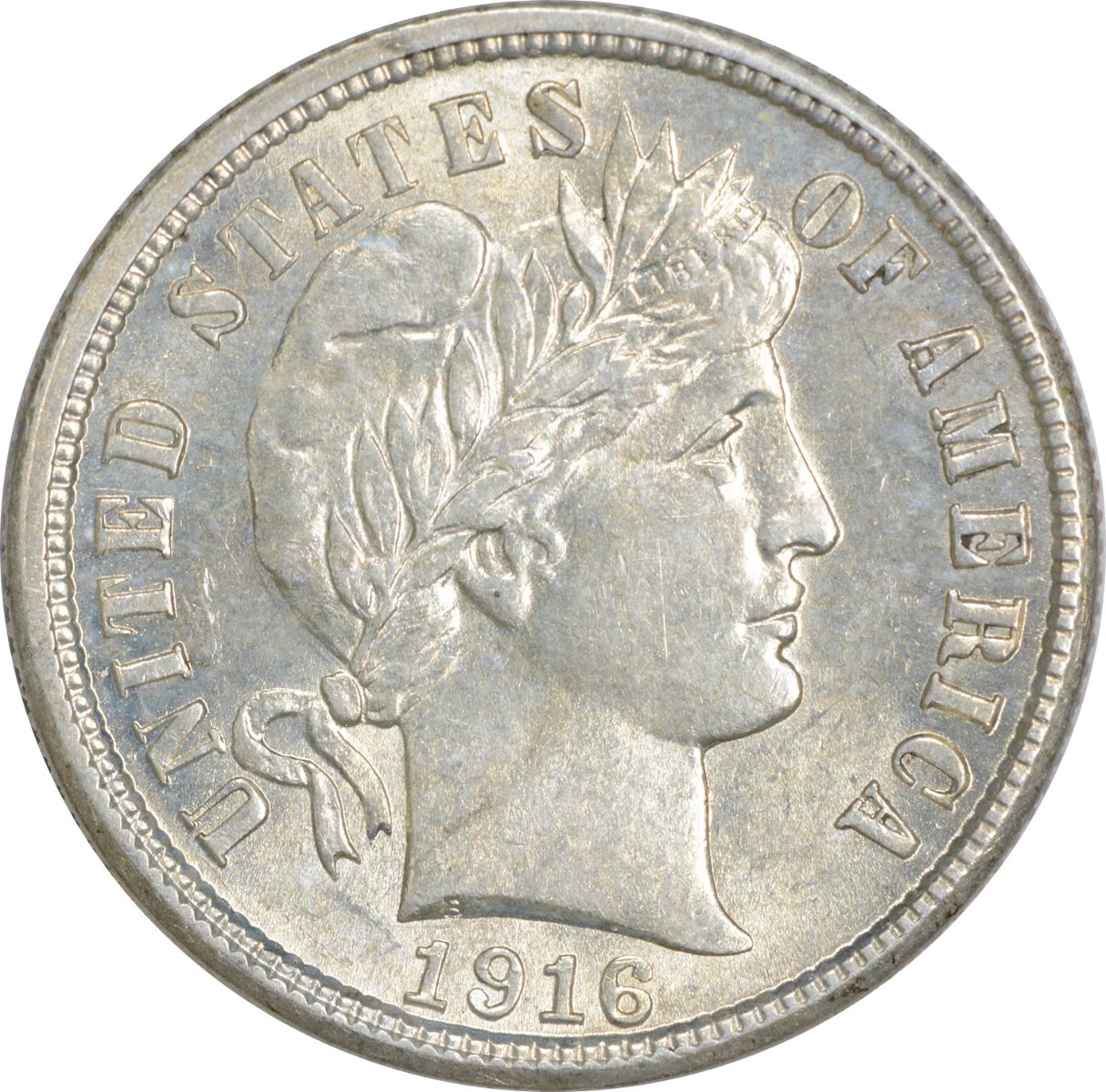
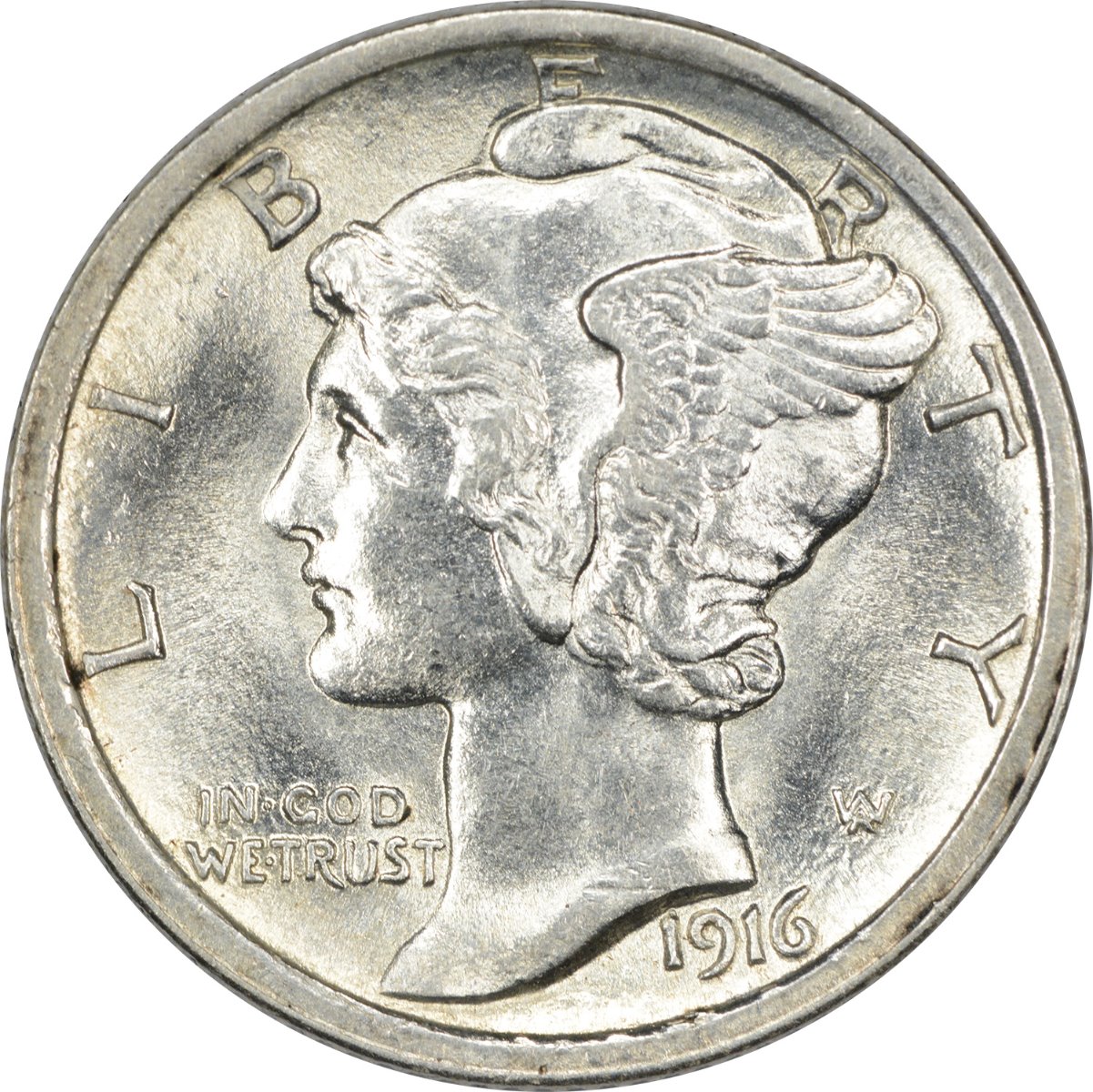
The Barber dime (1892-1916), designed by Mint Chief Engraver Charles E. Barber who also created the Barber quarter and Barber half dollar, coincided with America's emergence as a world power. This period produced the legendary 1894-S dime, one of the most valuable American coins with only nine known specimens surviving. The Mercury dime (1916-1945) spanned both World Wars, while the Roosevelt dime, introduced in 1946 following President Roosevelt's death, continues to be produced today, although its silver content ended in 1965 when rising silver prices forced a change to copper-nickel clad composition.
Each dime series tells a unique story of American innovation, artistry, and economic evolution, making them fascinating historical artifacts beyond their monetary value.
Design Elements
The obverse of American dimes has traditionally featured allegorical representations of Liberty or portraits of significant historical figures. Early designs like the Draped Bust and Capped Bust portrayed Liberty with flowing hair, often adorned with a cap or headband. The Seated Liberty design showed Liberty seated on a rock, holding a liberty pole, while the Barber dime presented a more classical profile of Liberty wearing a cap. The Mercury dime (actually featuring Liberty wearing a winged cap, not the Roman god Mercury) showcased a bold Art Deco aesthetic. Since 1946, the Roosevelt dime has featured President Franklin D. Roosevelt's left-facing portrait with "LIBERTY" and "IN GOD WE TRUST" inscriptions.
The reverse designs have evolved significantly over time:
- 1796-1807: Draped Bust design featuring a small eagle (1796-1798) followed by a heraldic eagle (1798-1807) with "UNITED STATES OF AMERICA" surrounding the central design.
- 1809-1837: Capped Bust design showing an eagle with outstretched wings, shield, and arrows with the denomination "10 C." below.
- 1837-1891: Seated Liberty design featuring a wreath surrounding the denomination "ONE DIME" with subtle modifications throughout its run.
- 1892-1916: Barber design showcasing a wreath of agricultural products (corn, wheat, maple leaves, and oak leaves) surrounding "ONE DIME."
- 1916-1945: Mercury/Winged Liberty Head design displaying fasces (a bundle of rods) symbolizing unity and strength, with an olive branch representing peace.
- 1946-Present: Roosevelt design initially featuring a torch (representing liberty) flanked by an olive branch (peace) and an oak branch (strength and independence), with the denomination "ONE DIME" below.
Mint marks, when present, appear on the reverse of earlier dimes and on the obverse of Roosevelt dimes. Authentic dimes should show proper strike characteristics, precise rim details, and appropriate luster for their era and condition.
Varieties & Key Dates
The world of collectible dimes offers numerous valuable key dates and varieties that serious collectors pursue. The most legendary rarity is undoubtedly the 1894-S Barber dime. With only 24 struck and merely 9 known to exist today, this coin has sold for between $1 million and $2 million in recent years. The circumstances of its creation remain mysterious, with theories ranging from mint accounting adjustments to gifts for banker friends of the San Francisco Mint superintendent.
Among Mercury dimes, the 1916-D stands as the undisputed key, with only 264,000 minted before the dies were needed for quarter production. Other notable Mercury rarities include the 1921 and 1921-D, both struck in limited quantities during the post-WWI recession. For variety hunters, the 1942/1 and 1942/1-D overdates offer dramatic doubled dies showing a "1" underneath the "2" in the date.
Barber dime collectors seek the low-mintage 1895-O, 1901-S, and 1903-S issues, while specialists pursue the 1905-O Micro O variety (featuring a quarter's mint mark punch mistakenly used on a dime). Seated Liberty dimes offer numerous scarce dates, particularly the 1871-CC, 1872-CC, and the aforementioned unique 1873-CC Without Arrows.
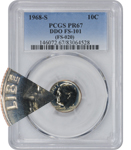
Roosevelt dime collectors focus on the scarce 1949-S and 1955 doubled die varieties, but the series' most valuable coins are the extraordinarily rare 1968 No S, 1970 No S, and 1975 No S proof issues, which were never intended for circulation. The 1975 No S Roosevelt dime proof, with only two known examples, has sold for over $450,000, making it one of the most valuable modern coins.
Error collectors pursue the dramatic 1982 No Mint Mark Roosevelt dime and various off-center strikes, wrong planchet errors, and broadstrikes. For those assembling complete collections, even common-date silver dimes have become increasingly valuable as their intrinsic silver content appreciates and fewer original specimens remain in the market.
Collecting Insights
When building a quality dime collection, condition considerations vary significantly by series. For early dimes (Draped Bust and Capped Bust), even heavily circulated examples can be valuable due to their scarcity, while Mercury and Roosevelt dimes are relatively affordable in circulated grades but command premiums in uncirculated condition.
Grading dimes requires careful attention to specific wear points. On Seated Liberty and Barber dimes, examine Liberty's cheek, hairlines, and the high points of the wreath for signs of wear. Mercury dimes show wear first on Liberty's cheek and hair details, and the central bands of the fasces on the reverse. Roosevelt dimes display wear primarily on Roosevelt's hair, cheek, and the torch's flame.
Strike quality affects value significantly across all series. Well-struck Mercury dimes exhibit full "split bands" on the fasces, commanding substantial premiums. Similarly, Roosevelt dimes with full torch bands are more desirable, particularly for key dates. Earlier series often suffer from weak strikes on certain areas, with fully struck specimens bringing strong premiums.
Toning impacts both aesthetics and value, with original, attractive toning enhancing appeal while cleaning or artificial toning severely diminishes value. Silver dimes naturally develop toning over decades of proper storage, with rainbow and champagne toning being particularly prized.
For beginning collectors, we recommend starting with a date-and-mint collection of Roosevelt silver dimes (1946-1964), which offers an affordable entry point with some challenging issues. As your knowledge and budget grow, consider expanding into Mercury dimes and eventually earlier series. Browse L&C Coins' extensive selection of collectible dimes to find authenticated specimens that match your collecting goals, all with free shipping and our 15-day return privilege.
Frequently Asked Questions
What makes the 1894-S Barber dime so valuable?
The 1894-S Barber dime's extreme value stems from its incredible rarity—only 24 were minted, with just 9 known to exist today. This mysterious issue was never intended for circulation, with theories suggesting they were struck to balance mint accounting books or as gifts for banking officials. Its status as one of the "Big Three" American coin rarities (alongside the 1804 silver dollar and 1913 Liberty nickel) has driven prices to $1-2 million for authenticated specimens. The combination of rarity, mystery, condition scarcity, and collector demand creates the perfect storm for extraordinary value.
How can I tell if my Mercury dime has full bands?
Full bands (FB) Mercury dimes display complete horizontal bands on the fasces (bundle of rods) on the reverse. Examine the central horizontal bands with magnification—true full bands show clear separation between the bands with distinct lines running across the entire width. The bands should be fully struck with no weakness or merging. Full bands designation significantly increases value, especially for scarcer dates like 1916-D, 1921, and 1921-D. This striking characteristic indicates superior quality and is most frequently found on dimes from the Philadelphia and San Francisco mints, while Denver issues often have weaker strikes.
Are silver Roosevelt dimes worth more than face value?
Yes, all Roosevelt dimes minted from 1946 through 1964 contain 90% silver and are worth significantly more than their face value. Even in well-worn condition, these dimes are valued at least for their silver content (approximately 0.0723 troy ounces of pure silver per coin). As of early 2025, this makes their intrinsic value several dollars each, with better dates and higher-grade specimens commanding additional premiums. Later Roosevelt dimes (1965-present) contain no silver and are generally worth face value unless in superb uncirculated condition or featuring mint errors.
What should I look for when collecting Barber dimes?
When collecting Barber dimes (1892-1916), focus on strong strike quality, particularly in Liberty's hair details and the wreath elements on the reverse. Authentic mint luster is highly desirable, while evidence of cleaning severely reduces value. Key dates to seek include the 1895-O, 1901-S, and 1903-S, with the legendary 1894-S being beyond most collectors' reach. Consider building a date-mint collection in the highest grade you can afford, starting with more common issues. The 1905-O Micro O variety (with a smaller-than-normal mint mark) offers an interesting specialized pursuit for advanced collectors.
How did the design of American dimes evolve over time?
American dime designs evolved from allegorical representations toward historical figures, reflecting changing national priorities and artistic trends. Early designs (Draped Bust, Capped Bust, Seated Liberty) featured various iterations of Liberty, aligning with the young republic's ideals. The Barber dime (1892-1916) introduced a more classical profile during America's Gilded Age. The Mercury/Winged Liberty dime (1916-1945) embraced Art Deco aesthetics during America's emergence as a global power. Finally, the Roosevelt dime (1946-present) marked the shift toward honoring historical figures rather than allegories, commemorating FDR's leadership during the Great Depression and World War II—significant because Roosevelt was also a devoted coin collector.
What are the most valuable error dimes?
The most valuable dime errors include the 1975 No S Proof Roosevelt dime (approximately $450,000), with only two known examples resulting from dies lacking the San Francisco mint mark. Other highly valuable errors include the 1968 No S and 1970 No S Proof Roosevelt dimes, typically valued between $50,000-$100,000. Among circulation strikes, the 1942/1 and 1942/1-D Mercury dime overdates (showing a "1" underneath the "2") can fetch $5,000-$50,000 depending on condition. Modern errors include the 1982 No P Roosevelt dime and various wrong planchet errors, such as dimes struck on penny blanks or quarter blanks, which can be worth hundreds or thousands depending on the specific error.
How should I store my dime collection to preserve its value?
Store your dime collection in archival-quality holders that are free from harmful chemicals like PVC, which can damage coins over time. For circulated dimes, coin albums or folders designed specifically for each series provide convenient viewing and organization. Uncirculated or valuable specimens deserve individual protection in non-reactive flips, capsules, or certified holders from services like PCGS or NGC. Keep your collection in a stable environment with controlled temperature and humidity, away from direct sunlight, extreme temperature fluctuations, and air pollutants. Never clean your dimes, as this significantly reduces collector value—original surfaces, even with natural toning, are always preferred over cleaned coins.
Discover Quality, History-Rich Coins at L&C Coins
L&C Coins is a family-owned and operated business founded by coin enthusiast Lee Crane. Since 1974, we've offered our loyal customers a diverse selection of authentic and rare coins at a variety of price points to suit collectors of all levels.
In addition to a history-rich collection of both certified and uncertified coins, you'll enjoy free shipping with every standard order and free express shipping for orders of $25 or more. Should you have any questions, don't hesitate to contact our team of experts — we're here to help.