
Morgan Silver Dollars
Morgan Silver Dollars
The legendary Morgan Silver Dollar stands as perhaps the most iconic and widely collected American coin series ever produced. Minted from 1878 to 1904 and again in 1921, these hefty silver pieces embody the spirit of the American West during a transformative era in our nation's history. Rich with artistic beauty and historical significance, Morgan Dollars captivate collectors with their intricate design, substantial silver content, and connection to the rich silver mines of Nevada.
Whether you're building a date collection, hunting for rare varieties, or simply appreciating their timeless appeal, Morgan Dollars offer an accessible entry point for new collectors and challenging depth for seasoned numismatists. From common dates perfect for beginners to legendary key issues that command premium prices, these classic silver dollars represent the pinnacle of American numismatic achievement.
Origin & History
The Morgan Silver Dollar owes its existence to political maneuvering and western mining interests in the late 19th century. Following the Panic of 1873 and subsequent depression, the Coinage Act of 1873 ended the free coining of silver, effectively demonetizing silver. This decision, dubbed the "Crime of '73" by critics, sparked outrage among western mining states and silver advocates. Their persistent pressure eventually led to the Bland-Allison Act of 1878, which required the U.S. Treasury to purchase between two and four million dollars worth of silver monthly from western mines to be coined into silver dollars.
With new legislation pending, the U.S. Mint needed a fresh design for these forthcoming silver dollars. Director of the United States Mint Henry Linderman recruited George T. Morgan, a talented young engraver from London's Royal Mint. Morgan's design won out over competitors, including Chief Engraver William Barber and his son Charles. Using Philadelphia schoolteacher Anna Williams as his model for Liberty, Morgan created what would become one of America's most beloved and enduring coin designs.
Production ceased in 1904 when government silver supplies were depleted. Later, under the 1918 Pittman Act, approximately 270 million Morgan Dollars were melted to sell silver bullion to Great Britain. The coins returned briefly in 1921 before being replaced by the Peace Dollar design. Morgan (and Peace) dollars have been produced annually since 2021 and are now 99.9% silver, no longer high relief, and O and CC as privy marks instead of mint marks since the mints no longer exist.
Design Elements
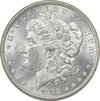
The Morgan Dollar's obverse features a classical profile of Liberty facing left, wearing a Phrygian cap symbolizing freedom. Her cap is adorned with cotton blossoms and wheat, representing America's agricultural heritage. The portrait is surrounded by the inscriptions "E PLURIBUS UNUM" above, the date below, and thirteen stars positioned around the rim symbolizing the original thirteen colonies. The design exemplifies the American Renaissance style popular during this period, combining classical elements with patriotic symbolism.
The coin's iconic design remained consistent throughout its production run, with subtle variations in the reverse:
- 1878: Initial reverse design featured an eagle with 8 tail feathers (rare), quickly modified to 7 tail feathers, with transitional 7/8 tail feather varieties also existing
- 1878-1904: Standard reverse showing an American eagle with outstretched wings, clutching arrows and an olive branch, encircled by a wreath, with "UNITED STATES OF AMERICA" and "ONE DOLLAR" inscriptions
- 1921: Slight modifications to the reverse with slightly flatter relief than previous years
Morgan dollars measure an impressive 38.1mm in diameter and 2.4mm in thickness, with a weight of 26.73 grams. Composed of 90% silver and 10% copper, they contain 0.7734 troy ounces of pure silver. Mint marks, when present, are located on the reverse just below the wreath and above the "DO" in "DOLLAR."
Varieties & Key Dates
The Morgan Dollar series encompasses numerous sought-after varieties and key dates that command significant premiums. The 1893-S stands as the undisputed king of circulation strike rarities, with a tiny mintage of just 100,000 pieces. In high grade, these coins can command prices exceeding $300,000. Other notable circulation strike rarities include the 1889-CC, 1892-S, 1894, and 1895-O.
The 1895 Philadelphia issue exists only as proofs, with no confirmed business strikes known despite mint records indicating 12,000 were struck. Numismatists believe these were likely melted, making the 1895 "King of the Morgans" among proof issues, with only about 800 surviving specimens.
Several varieties have earned legendary status among collectors. The 1878 7/8 Tail Feather showcases a fascinating transitional design. The 1879-CC "Capped Die" exhibits a mint mark partially filled with die debris, creating the appearance of a "CC over CC." The 1880/79 and 1888-O "Hot Lips" both display spectacular doubled dies, while VAM varieties (named for scholars Van Allen and Mallis) like the 1888-O "Scarface" and 1901 "Shifted Eagle" showcase dramatic die breaks and positioning errors.
Carson City (CC) Morgans remain especially prized, having been produced at the famous frontier mint in Nevada, close to the Comstock Lode silver deposits that initially prompted the coin's creation. The 1879-CC, 1889-CC, and 1893-CC rank among the most valuable, though the entire CC run maintains strong collector interest. For specialists seeking dramatic Morgan dollar varieties, these coins offer endless opportunities for discovery and study.
Collecting Insights
When building a Morgan Dollar collection, condition plays a crucial role in both enjoyment and value. Unlike many classic U.S. coins, Morgans can be found in high grades without breaking the bank, making them approachable for collectors at various budget levels. Uncirculated specimens display vibrant luster, sharp strikes, and minimal bag marks—factors that significantly impact desirability and price.
Morgan Dollars can be collected in multiple ways. Some collectors pursue a date and mint mark set, while others focus on specific mints like Carson City or San Francisco. VAM variety specialists hunt for specific die characteristics, while still others collect by year, regardless of mint. For beginners, we recommend starting with common dates in the best condition you can afford, gradually adding key dates as your budget allows.
Grading terminology specific to Morgan Dollars includes "deep mirror prooflike" (DMPL) and "prooflike" (PL) designations for coins with mirror-like fields. These specimens command substantial premiums, particularly when paired with strong cameo contrast between fields and devices. Toning also impacts desirability—original rainbow toning can significantly enhance a coin's appeal and value. Many collectors specifically seek toned Morgan dollars for their natural beauty and eye appeal.
For those interested in building comprehensive type coin collections, Morgan dollars serve as excellent centerpiece coins alongside earlier designs like Bust silver dollars and Liberty Seated dollars. Browse our extensive selection of authenticated Morgan Silver Dollars, all backed by L&C Coins' 15-day return privilege and free standard shipping. Our numismatists have over 90 years of combined experience ensuring you receive properly graded, quality specimens at fair market prices.
Frequently Asked Questions
What makes Carson City (CC) Morgan dollars more valuable than other mint marks?
Carson City Morgan dollars are highly prized due to their connection to America's western frontier and Nevada's famous Comstock Lode silver strike. The Carson City Mint operated for only a short period (1870-1893) with limited production capacity, resulting in lower mintages. Additionally, many CC Morgans were melted under the 1918 Pittman Act, further reducing their availability. Their historical significance and relative scarcity combine to make them especially desirable to collectors.
How can I tell if my Morgan dollar is authentic?
Authentic Morgan dollars should have the correct weight (26.73g), diameter (38.1mm), and sound (a distinctive ring when lightly tapped). Check for proper detail in Liberty's hairlines and the eagle's feathers. Counterfeit Morgans often have improper letter spacing, incorrect mint marks, or unusual surfaces. For valuable dates, professional authentication from services like PCGS or NGC is recommended. L&C Coins offers only authenticated, genuine specimens with our 15-day return privilege.
What are VAM varieties and why do collectors seek them?
VAM varieties (named after numismatists Van Allen and Mallis) are specific die variations documented in their comprehensive Morgan dollar reference guide. These varieties include doubled dies, repunched mint marks, and other die anomalies that create distinctive characteristics. Collectors pursue VAMs for the thrill of discovery, with some rare varieties commanding significant premiums. Popular examples include the 1888-O "Hot Lips" doubled die and the 1901 "Shifted Eagle."
Which Morgan dollar dates should a beginning collector start with?
New collectors should start with readily available dates like 1879-S, 1880-S, 1881-S, 1882-S, 1896, 1897, or 1898, which can be found in attractive condition at reasonable prices. These provide excellent examples of the design's artistic merit without commanding significant premiums. As you develop your collecting strategy, you can gradually add semi-key and key dates, building toward more challenging acquisitions.
How did the Pittman Act affect Morgan dollar availability today?
The 1918 Pittman Act authorized melting approximately 270 million silver dollars (mostly Morgans) to sell as bullion to Great Britain during World War I. This mass melting dramatically reduced the population of many dates, particularly affecting certain mint/date combinations. The Act significantly impacts today's market, creating scarcity where millions of coins once existed and explaining why certain dates that had high original mintages are now quite rare.
What's the difference between circulated and uncirculated Morgan dollars?
Circulated Morgans show wear on the high points, particularly Liberty's cheek and hair above her ear, and the eagle's breast feathers. Uncirculated (Mint State) coins retain their original mint luster with no wear from circulation, though they may have contact marks from handling at the mint. While circulated coins (especially in higher grades like Extremely Fine or About Uncirculated) offer affordability, uncirculated specimens provide the full artistic expression as intended and typically appreciate more consistently.
Why were Morgan dollars produced again in 1921 after being discontinued in 1904?
The 1918 Pittman Act not only authorized melting millions of Morgan dollars but also required replacement of the melted coins with newly minted silver dollars. When production resumed in 1921, the Mint initially returned to the Morgan design while preparing the new Peace dollar design. This resulted in the production of more than 86 million Morgan dollars across three mints (Philadelphia, Denver, and San Francisco) during 1921 alone, creating a distinctive final chapter in the Morgan dollar story.
Discover Quality, History-Rich Coins at L&C Coins
L&C Coins is a family-owned and operated business founded by coin enthusiast Lee Crane. Since 1974, we've offered our loyal customers a diverse selection of authentic and rare coins at a variety of price points to suit collectors of all levels.
In addition to a history-rich collection of both certified and uncertified coins, you'll enjoy free shipping with every standard order and free express shipping for orders of $25 or more. Should you have any questions, don't hesitate to contact our team of experts — we're here to help.