
Jefferson Nickels
Jefferson Nickels
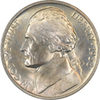
Jefferson nickels, the enduring five-cent pieces that have jingled in American pockets since 1938, represent one of the longest-running coin designs in U.S. history. Replacing the iconic Buffalo nickel, these coins feature the profile of Thomas Jefferson on the obverse and his historic home, Monticello, on the reverse.
Their remarkable longevity of over 80 years has produced numerous collectible varieties, from the scarce wartime "silver nickels" to modern minting varieties. Whether you're a beginning collector drawn to their accessibility or an advanced numismatist hunting for Full Steps specimens and rare errors, Jefferson nickels offer both historical significance and collecting challenges that have captivated generations of coin enthusiasts.
Origin & History
The Jefferson nickel was introduced in 1938 to replace the Buffalo (or Indian Head) nickel, which had reached its 25-year minimum production requirement. The U.S. Mint held an open competition for the new design, with 390 artists submitting entries. German-born sculptor Felix Schlag won the competition with his side-profile portrait of Jefferson and a three-quarter view of Monticello, though the latter was modified to a straight-on view before production began.
The timing of the Jefferson nickel's introduction coincided with growing international tensions that would soon lead to World War II. This global conflict would significantly impact the series when, in 1942, nickel was deemed a strategic war material. Congress authorized a composition change, and from late 1942 through 1945, the coins were struck in a 35% silver alloy with manganese and copper, creating the distinctive "war nickels" that collectors eagerly seek today.
Following the war, the original copper-nickel composition resumed, and the design remained largely unchanged until 2004. In that year, the Westward Journey Nickel Series commemorated the bicentennial of the Lewis and Clark expedition with two new reverse designs, followed by two more in 2005. In 2006, a new forward-facing portrait of Jefferson was introduced, modernizing the series while maintaining its connection to America's third president. Throughout these changes, the Jefferson nickel has remained a constant in American commerce and a staple for collectors of all levels, much like how Lincoln cents have anchored penny collecting.
Design Elements
The obverse of the Jefferson nickel features a left-facing profile of Thomas Jefferson, based on a marble bust by French sculptor Jean-Antoine Houdon. Schlag's design presents Jefferson with a dignified expression, his hair tied in a queue at the back. The inscriptions "IN GOD WE TRUST" appear to the left of the portrait, while "LIBERTY" and the year of mintage are positioned to the right. The designer's initials "FS" were not added until 1966, appearing discreetly at the base of Jefferson's bust. Mint marks are found on the obverse, positioned to the right of Jefferson's portrait (except for wartime issues).
The reverse design has evolved through several iterations:
- 1938-2003: The original reverse featured Monticello, Jefferson's neoclassical Virginia home, in a front-facing view. The inscription "MONTICELLO" appears on a ribbon below the building, with "FIVE CENTS" and "UNITED STATES OF AMERICA" encircling the upper and lower periphery, and "E PLURIBUS UNUM" positioned to the right of the dome.
- 2004: Two commemorative designs for the Lewis and Clark Expedition bicentennial—the "Peace Medal" reverse (featuring hands shaking) and the "Keelboat" reverse showing the expedition's vessel.
- 2005: Two additional commemorative designs—the "American Bison" reverse and the "Ocean in View" reverse celebrating Lewis and Clark's arrival at the Pacific.
- 2006-Present: Return to the traditional Monticello design, though slightly modified with crisper architectural details than the original.
The wartime silver nickels (1942-1945) can be easily identified by the large mint mark positioned above Monticello's dome—the only time in the series when Philadelphia issues carried a "P" mint mark, and the only U.S. coins at that time with the mint mark on the reverse.
Jefferson nickels measure 21.21mm in diameter and 1.95mm in thickness, with a standard weight of 5.0 grams (wartime silver issues weigh 5.6 grams). Authentic specimens display proper font characteristics and precise rim details, with the earlier issues showing particularly fine engraving work in Jefferson's hair and Monticello's architectural elements.
Varieties & Key Dates
Jefferson nickels offer collectors numerous key dates and intriguing varieties that enhance the series' appeal. The undisputed key date for circulation strikes is the 1950-D, with a mintage of just 2.6 million pieces—the lowest in the series. While not rare in absolute terms, its status as a "first among equals" has made it a perennial favorite, with well-preserved examples commanding significant premiums.
The wartime silver nickels (1942-P, D, S with large mint marks through 1945-P, D, S) form a distinctive subgroup often collected separately. These "35% silver" coins, sometimes called "war nickels," are easily identifiable by their unique reverse mint mark placement above Monticello's dome. They contain 0.05626 ounces of silver, giving them intrinsic value beyond their face value.
Several important die varieties have emerged as collection centerpieces. The 1939 Doubled Monticello (doubled reverse) shows significant doubling on the steps and dome. The 1942-D Over Horizontal D displays an unusual mint mark where a D was first punched sideways, then corrected. The 1943-P Doubled Eye shows dramatic doubling on Jefferson's eye, creating an almost spectral appearance. The 1949-D D Over S and 1954-S S Over D represent cases where dies were initially prepared for one mint, then repunched for another.
Modern collectors focus intensely on "Full Steps" specimens—coins with complete horizontal lines on Monticello's steps. These steps are often weakly struck, making examples with five or six clearly defined steps highly desirable and valuable. The 1953-S, 1954-S, and 1969-D are particularly challenging to find with Full Steps, commanding significant premiums over standard strikes.
More recent Jefferson nickel varieties include the "Speared Bison" 2005-D with a die gouge through the bison and numerous State Quarter mules where Jefferson nickel obverses were mistakenly paired with State Quarter reverses. For those seeking affordable yet intriguing collecting challenges, the Jefferson series offers a wealth of opportunities across its more than 80-year history, similar to how type coin collecting allows enthusiasts to pursue representative examples across multiple series.
Collecting Insights
Building a quality Jefferson nickel collection requires attention to several key factors that influence both collectability and value. Strike quality varies considerably throughout the series, with many issues showing weakness on Monticello's steps—the primary focal point for grading full-strike coins. A complete "Full Steps" (FS) designation requires five or six clearly defined steps, with specimens graded FS-5 or FS-6 commanding substantial premiums, particularly for dates known for weak strikes like the 1953-S, 1954-S, and 1969-D.
Luster and surface preservation play crucial roles in evaluating uncirculated Jefferson nickels. The copper-nickel composition tends to show contact marks readily, making pristine surfaces particularly desirable. Many early Jefferson nickels display attractive rainbow toning when properly stored, with vibrant colors enhancing their eye appeal and collector desirability.
For wartime silver issues (1942-1945), toning patterns differ from regular copper-nickel specimens, often presenting as blue-gray or amber tones. These silver-alloy nickels frequently display spotting or discoloration due to their manganese content, making well-preserved examples with clean surfaces especially valuable.
When adding Jefferson nickels to your collection, consider focusing on high-grade circulation strikes of key dates or Full Steps examples of more common dates as entry points. Unlike their predecessor Buffalo nickels, which often suffer from dateless examples due to rapid wear, Jefferson nickels maintain their readability well in circulation, making them accessible to collectors at all budget levels. Browse our extensive inventory of Jefferson nickels to find specimens that match your collecting goals and budget, all backed by our free shipping and 15-day return privilege.
Frequently Asked Questions
What makes the 1950-D Jefferson nickel so valuable?
The 1950-D Jefferson nickel is valuable primarily because of its low mintage of just 2.6 million pieces—the lowest in the regular Jefferson series. Due to rumors of its scarcity, many were saved in uncirculated condition by collectors and dealers at the time of issue. This created an interesting market dynamic where it's relatively available in high grades but commands a premium as the recognized key date of the series. Well-preserved examples with Full Steps can be worth several hundred dollars, while even circulated specimens sell for well above face value.
How can I identify wartime silver Jefferson nickels?
Wartime silver Jefferson nickels (1942-1945) are easily identified by the large mint mark positioned above Monticello's dome on the reverse—the only time in U.S. coinage history when the Philadelphia Mint used a "P" mint mark on five-cent pieces until 1979. These "war nickels" contain 35% silver (along with 56% copper and 9% manganese) and often have a slightly different color than standard copper-nickel issues—typically appearing slightly darker or with a bluish-gray tint. The silver composition was implemented to conserve nickel for military purposes during World War II.
What are "Full Steps" Jefferson nickels, and why are they valuable?
"Full Steps" Jefferson nickels display complete horizontal lines on Monticello's steps on the reverse of the coin. Typically, five or six clearly defined steps must be visible for this designation (termed FS-5 or FS-6). These steps are often weakly struck due to the design's characteristics and die wear during production, making Full Steps examples rare for many dates. Their value stems from their relatively scarcity and the visual appeal of a sharply struck coin. For some dates like the 1953-S, 1954-S, and 1969-D, Full Steps examples can command 10-20 times the value of standard strikes in the same grade.
Are there any valuable errors in the Jefferson nickel series?
Yes, the Jefferson nickel series includes several valuable errors. The most notable include the 1943-P Doubled Eye, showing dramatic doubling on Jefferson's eye; various doubled-die obverses and reverses like the 1939 Doubled Monticello; and mint mark errors like the 1954-S S Over D and 1942-D Over Horizontal D. Modern errors include the 2004-D and 2005-D "Speared Bison" varieties with die gouges through the bison design and extremely valuable "mules" where Jefferson nickel obverses were paired with State Quarter reverses. While most Jefferson nickels in circulation are worth face value, these specific errors can be worth hundreds or even thousands of dollars.
How should I store my Jefferson nickel collection?
Jefferson nickels should be stored in holders specifically designed for numismatic preservation. For circulated coins, cardboard folders or vinyl pages in albums provide adequate protection. For uncirculated or high-grade specimens, use inert materials like Mylar flips, capsules, or professional slab holders. Avoid PVC-containing materials, which can damage coins over time. Store your collection in a cool, dry environment with stable temperature and humidity levels. Never clean your coins, as this significantly reduces their collector value. For valuable specimens, consider professional grading and encapsulation by services like PCGS or NGC for both protection and certification of authenticity and grade.
When did the Jefferson nickel design change?
The Jefferson nickel design has undergone several significant changes since its introduction in 1938. The first major changes came in 2004-2005 with the Westward Journey Nickel Series, which featured four different commemorative reverses celebrating the bicentennial of the Lewis and Clark expedition. In 2006, the obverse was redesigned with a forward-facing portrait of Jefferson by Jamie Franki, replacing the original profile view that had been used for 68 years. The Monticello reverse was restored in 2006 but with enhanced detail. Most recently, in 2020, a new reverse design by U.S. Mint Artistic Infusion Program artist Donna Weaver was approved, featuring a refreshed depiction of Monticello, though the classic Schlag obverse portrait returned, modernized with improved detail.
Discover Quality, History-Rich Coins at L&C Coins
L&C Coins is a family-owned and operated business founded by coin enthusiast Lee Crane. Since 1974, we've offered our loyal customers a diverse selection of authentic and rare coins at a variety of price points to suit collectors of all levels.
In addition to a history-rich collection of both certified and uncertified coins, you'll enjoy free shipping with every standard order and free express shipping for orders of $25 or more. Should you have any questions, don't hesitate to contact our team of experts — we're here to help.