Coin Roll Hunting and Registry Sets: Modern Strategies for Collecting Kennedy Half Dollars

Hunting for Kennedy Half Dollars in the Wild
I. The Thrill of the Hunt: Coin Roll Hunting (CRH)
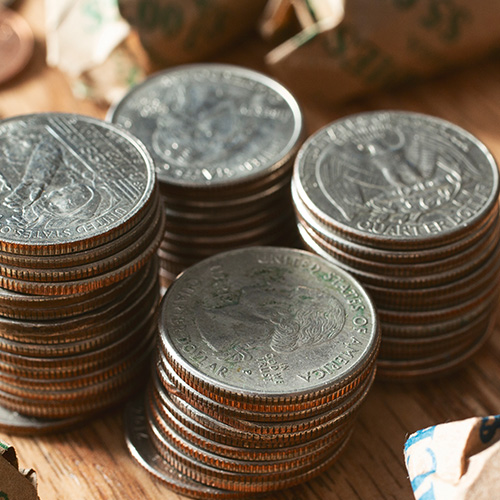
For many modern collectors, the most exciting way to acquire Kennedy Half Dollars is through Coin Roll Hunting (CRH). This involves ordering boxes of half dollars (typically $500 face value, or 1,000 coins) from a local bank and systematically searching them for valuable coins.
The Three Primary Targets of the Hunt:
1. The Silver Haul (1964–1970): The primary motivation for CRH is finding silver coins, which carry intrinsic metal value far above face value.
-
1964: These are 90% silver issues.
-
1965–1970: These are 40% silver clad issues. Finding a "collection dump," where someone unknowingly deposits a large quantity of silver halves, is the ultimate goal, sometimes resulting in boxes filled with 90% or 40% silver coins.
2. The Low-Mintage NIFC Dates (2002–2020): From 2002 through 2020, the Mint stopped releasing half dollars into general circulation, selling them only to collectors in rolls and bags (NIFC - Not Intended For Circulation). These dates have relatively low mintages (1.7 to 5 million per mint). If NIFC coins are found in a bank roll, it means a collector has spent them, making them prized finds for hobbyists.
3. The Key Date and Varieties: CRH can yield scarcer dates that were only released in collector sets, such as the 1987-P and 1987-D issues. Additionally, hunters look for circulating errors or varieties, such as the 1974-D Doubled Die Obverse (DDO) or the elusive 1972-D No FG variety, as these can be found in circulation.
Success in CRH: A Reality Check
Coin Roll Hunting is a patient endeavor. Due to the efficiency of modern sorting machines and the dedication of the collector community, finding silver is becoming increasingly difficult, and "skunk boxes" (zero silver finds) are common. However, the possibility of encountering a large "dump" or spotting a valuable variety keeps the hobby active.
II. Identification Techniques: Knowing Your Edges
Since the silver coins retain a bullion value floor, quickly distinguishing silver from clad is crucial for Coin Roll Hunting. The best visual method is inspecting the edge of the coin.
1. Edge Examination (The Visual Method)
The edge color reveals the coin's composition:
|
Composition Era |
Years |
Silver Content |
Edge Appearance |
|
90% Silver |
1964 |
0.3617 troy oz pure silver |
Solid White Silver Edge |
|
40% Silver Clad |
1965–1970 |
0.1479 troy oz pure silver |
Grey/Silver Edge (A silver/grey clad layer visible over a core) |
|
Copper-Nickel Clad |
1971–Present |
0% Silver |
Copper Stripe (A distinct orange/brown copper band) |
2. Weight Test (The Precision Method)
A digital scale, accurate to 0.1 gram, provides verification of composition, especially for worn coins or ambiguous edges:
-
90% Silver (1964): Weighs 12.50 grams.
-
40% Silver Clad (1965–1970): Weighs 11.50 grams.
-
Copper-Nickel Clad (1971–Present): Weighs 11.34 grams.
3. Variety Spotting (The Magnification Method)
To identify valuable varieties, magnification is essential. Collectors use a 5x–10x magnifying glass or jeweler’s loupe to inspect critical areas for doubling or missing initials:
-
"No FG" Varieties (e.g., 1972-D, 1982-P): Inspect the reverse near the eagle’s tail feathers for the absence of the designer's initials, "FG". True "No FG" specimens should show no trace of the initials.
-
Doubled Die Varieties (e.g., 1974-D DDO): Look for doubling on the obverse motto "IN GOD WE TRUST". The 1974-D DDO is often strong enough to be visible without high magnification.
III. Collecting Strategies for Every Level
The Kennedy Half Dollar is unique because it is one of the most affordable modern series to complete in a basic date/mint set. Collecting can be organized by strategy, budget, and desired level of numismatic detail.
1. Type Collecting (The Affordable Start)
This strategy involves acquiring just one well-preserved example of each major metallurgical composition and special issue:
-
90% Silver (1964): Represents the final year of solid silver coinage.
-
40% Silver Clad (1965–1970): Represents the transitional era.
-
Copper-Nickel Clad (1971–2001): Represents the base metal circulating issues.
-
NIFC Clad (2002–Present): Represents the low-mintage collector issues.
-
Bicentennial (1776–1976): Represents the special commemorative design.
This approach offers educational value by showcasing the coin's history and composition changes without requiring extensive purchasing.
2. Date and Mint Set Completion (The Core Challenge)
This is the goal of most general collectors: acquiring a business strike (non-proof) coin for every date and mint mark from 1964 to the present (or 2025).
-
Key Obstacles: Finding the few key dates that were not released into circulation: the 1970-D (only in Mint Sets) and the 1987-P and 1987-D (only in Mint Sets). These must typically be purchased from a dealer or acquired by breaking up an original Mint Set.
-
Acquisition Methods: The set is generally achievable through a combination of bank searching (CRH) and purchasing key dates, special NIFC issues, and specific certified varieties from dealers or online marketplaces.
3. Variety and Error Specialization (Cherrypicking)
This strategy focuses purely on hunting for specific minting anomalies, often referred to as "cherrypicking". Key targets include:
-
Doubled Dies: Targeting issues like the 1974-D DDO, which are known to be "cherrypickable" in mint sets.
-
Missing Initials: Searching for the 1972-D No FG or 1982-P No FG where die polishing erased the designer's initials.
-
Special Proof Issues: Acquiring proof varieties like the 1964 Accented Hair Proof, identified by enhanced hair detail and the truncated serif on the letter "I" in "LIBERTY".
4. Registry Set Competition (The Elite Pursuit)
Advanced collectors often participate in competitive "registry sets" sponsored by third-party grading services (PCGS, NGC).
-
Focus: This strategy prioritizes conditional rarity—finding coins in the absolute highest grades (e.g., MS-67 or MS-68 for business strikes, or PF-69 Deep Cameo for proofs).
-
Acquisition: This level requires purchasing certified, high-grade coins through dealers and major auction houses, as the competition drives demand for the finest-known examples of common dates or varieties.
IV. The Essential Collector’s Toolkit and Preservation
Proper tools and handling techniques ensure that valuable finds are preserved and accurately identified.
Essential Tools
Magnification: Critical for identifying small varieties (No FG, DDO)., A 5x–10x jeweler’s loupe or USB digital microscope is recommended.
Precision Scale: Verifies composition by weight (90% Ag vs. 40% Ag vs. clad)., Must be accurate to 0.1 gram.
Reference Materials: Provides diagnostic details and rarity information., The annual Red Book and variety guides are key resources.
Coin Preservation
The fundamental rule of coin collecting is that cleaning destroys value. Collectors prefer original, uncleaned surfaces.
Handling: Always hold coins by their edges, using cotton gloves if possible, to avoid transferring oil or residue to the coin surface.
Storage: Use non-reactive storage materials like Air-Tite capsules or acid-free, non-PVC coin flips. Improper storage (like soft plastic containing PVC) can cause chemical reactions that damage the coin's surface and significantly reduce its value.
By combining the hands-on activity of coin roll hunting for silver and NIFC issues with the specialized knowledge required to spot key errors like the 1972-D No FG and the 1974-D DDO, the Kennedy Half Dollar series offers a dynamic and rewarding journey for collectors at every skill level.
About the Author