Carson City Morgan Dollars: Collecting the Silver That Built the West

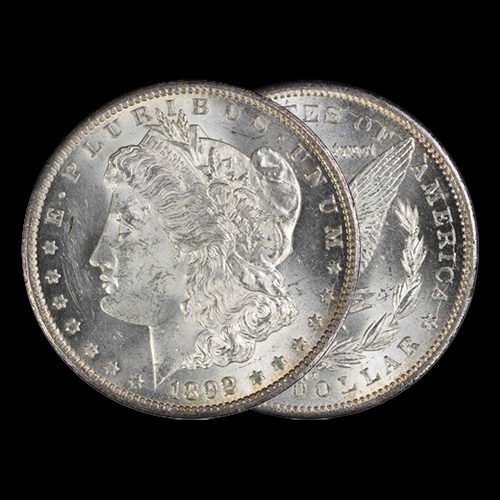
No two letters in American numismatics carry more weight than "CC." The Carson City mint mark, stamped on silver and gold coins produced in the high desert of Nevada between 1870 and 1893, transforms a Morgan Dollar from a collected coin into a piece of frontier history. The Carson City Mint was born from the Comstock Lode — one of the richest silver strikes in American history — and its coins carry that story with them. For collectors, CC Morgans represent the intersection of numismatic rarity and Western mythology, and they have been among the most sought-after U.S. coins for over half a century.
The Carson City Mint produced Morgan Dollars from 1878 through 1885, then again from 1889 to 1893 before closing permanently. In total, only 13.7 million Morgan Dollars were struck at Carson City across those 13 dates. To put that number in context, the Denver Mint alone struck 20.3 million Morgans in a single year (1921). Every CC Morgan was produced in small quantities by Old West standards, and the Pittman Act of 1918 melted millions more, further reducing the surviving population.
The GSA Hoard: Government Silver Returns to the People
The story of Carson City Morgans took a dramatic turn in the 1960s when the U.S. Treasury discovered bags containing approximately 2.8 million Morgan Dollars in its vaults, more than 95% of which bore the CC mint mark. In 1970, Congress authorized the General Services Administration to sell these coins to the public. Between 1972 and 1980, the GSA conducted a series of sales that raised $107 million and transformed the Carson City Morgan market overnight.
The GSA packaged each coin in a hard plastic holder with a certificate of authenticity. At the time, collectors were not accustomed to coins in plastic cases and many broke the holders open. Decades later, those original GSA holders have become collectible in their own right. PCGS and NGC now grade CC Morgans in their original GSA packaging, and coins retaining that pedigree command premiums over equivalent raw or re-holdered examples. For certain dates that were well-represented in the GSA Hoard (particularly 1882-CC, 1883-CC, and 1884-CC), mint-state examples are available at relatively accessible prices. For dates that were scarce in the Hoard, the GSA sales did little to relieve rarity.
Key Dates and the Complete CC Set
Building a complete 13-coin Carson City Morgan set is a realistic goal for a dedicated collector, though three coins will test both patience and budget. The 1889-CC is the undisputed king of the series. Despite a mintage of 350,000, its survivorship rate is among the lowest of any Morgan Dollar from any mint — fewer than 15,000 coins have been graded by PCGS and NGC combined. In circulated grades, expect to pay $3,500 or more; in MS65, the coin can exceed $100,000.
The 1879-CC and 1893-CC round out the trio of scarce dates. The 1879-CC had a mintage of 756,000 but saw heavy circulation and significant melt loss. The 1893-CC, the final year of Carson City production, carries both rarity and sentimental value as the last silver dollar to bear the CC mark. Both coins command four-figure prices even in lower circulated grades.
The more accessible dates — 1878-CC, 1880-CC through 1885-CC, and 1890-CC through 1891-CC — offer excellent entry points. Many of these were well-represented in the GSA Hoard, and certified mint-state examples can be found in the $250–$600 range. Starting with these common dates and working toward the keys is the most practical approach to building the set.
Two Eras of Production
Carson City Morgan production falls into two distinct periods. The early run (1878–1885) saw relatively higher mintages, and many of these coins were stored in Treasury vaults rather than circulated. The later run (1889–1893) produced fewer coins, and most entered active circulation. This is why the 1889–1893 dates tend to be significantly rarer in uncirculated condition than the earlier issues.
Notable within the early period is the 1880-CC, which exists with two reverse varieties: the "Reverse of 1878" (flat eagle breast) and the "Reverse of 1879" (rounded eagle breast). Both are collected as distinct types, adding a 14th coin for completists who track varieties. The 1881-CC and 1885-CC, with the two lowest mintages in the series (296,000 and 228,000 respectively), would be major rarities if not for their strong presence in the GSA Hoard.
Grading and Authentication
Because CC Morgans carry substantial premiums over their Philadelphia, San Francisco, and New Orleans counterparts, authentication is not optional — it is a requirement. Counterfeit CC mint marks added to common-date Morgans are the most frequent form of alteration in the series. For any significant CC Morgan purchase, third-party certification from PCGS, NGC, or ANACS provides the confidence that both the coin and its mint mark are genuine.
For GSA-holder examples, both PCGS and NGC offer grading services that encapsulate the coin within its original GSA holder, preserving the pedigree while adding a certified grade. This "in-holder" grading is the preferred approach for coins that retain their original government packaging.
Browse our selection of certified Carson City Morgan Dollars at L&C Coins. With 50 years of experience and expertise in the CC series, we can help you build your Carson City collection with confidence. Questions? Contact our team at 1-800-669-0953 — we are here to help.
About the Author