Barber Coins: Collecting the Dimes, Quarters, and Half Dollars That Defined an Era

Between 1892 and 1916, three denominations of American silver coinage shared a single designer’s vision. Charles E. Barber, the sixth Chief Engraver of the United States Mint, created a unified Liberty Head design for the dime, quarter, and half dollar that would circulate through some of the most transformative years in American history — from the Spanish-American War through the Wright brothers’ first flight to the opening years of World War I. For collectors today, Barber coins offer a unique opportunity to build across three denominations with one cohesive design language.
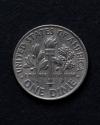
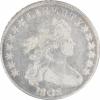
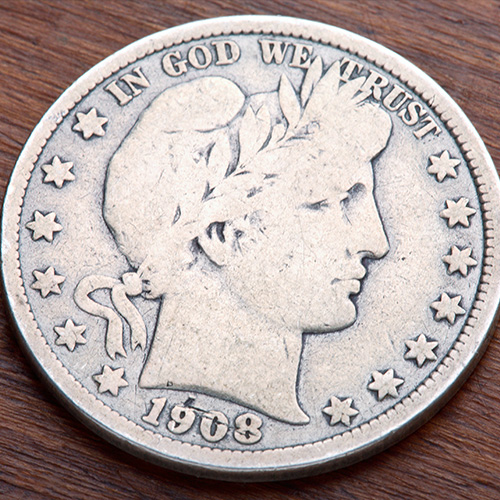
Barber’s design features Liberty facing right, wearing a Phrygian cap adorned with a laurel wreath. On the dime, a small headband inscribed "LIBERTY" appears above Liberty’s brow. On the quarter and half dollar, the motto "In God We Trust" appears above her head. The reverses differ by denomination: the dime carries a simple wreath enclosing "ONE DIME," while the quarter and half dollar feature a heraldic eagle adapted from the Great Seal of the United States. This shared-but-varied design makes the three denominations visually complementary when displayed together.
How Barber Coins Came to Be
The Mint Act of 1890 allowed coin designs to be changed after 25 years in production. With the Seated Liberty designs eligible for replacement in 1891, Mint Director Edward O. Leech organized a design competition. When invited sculptors refused to participate without guaranteed compensation and public submissions proved unsuitable — Leech called the competition a "wretched failure" — he assigned the task to Barber himself. The first Barber coins were struck on January 2, 1892, at the Philadelphia Mint. Production continued through 1916 for dimes and quarters, and through 1915 for half dollars, when they were replaced by the artistic renaissance designs of Weinman and MacNeil.
Key Dates by Denomination
Each denomination has its own rarity hierarchy, giving collectors three distinct challenges to pursue.
Barber Dimes: The headliner is the 1894-S, one of the most famous rarities in all of American numismatics. Only 24 were struck at the San Francisco Mint, and fewer than 10 are known to survive. It is a million-dollar coin that most collectors will never own, but its legend adds mystique to the entire series. Practical key dates include the 1895-O, the 1893-O, and the 1901-S. The 1905-O Micro O variety — struck with a quarter dollar mint mark punch — is an intriguing variety for specialists. With 74 date-and-mint-mark combinations (excluding the 1894-S), a near-complete set of Barber dimes is the most affordable of the three denominations.
Barber Quarters: The "Big Three" quarter rarities are the 1896-S, 1901-S, and 1913-S. The 1901-S is the undisputed key, with a mintage of approximately 72,664 coins and values starting at several thousand dollars even in low grades. The 1913-S, with just 40,000 struck, is another formidable stopper. Barber quarters were produced at four mints (Philadelphia, San Francisco, New Orleans through 1909, and Denver from 1906), and mint-state examples are scarce to rare for most pre-1900 dates.
Barber Half Dollars: Key dates include the 1892-O (inaugural year, 390,000 mintage), the 1897-O (632,000), and the 1904-S (553,038). The final three years of production — 1913, 1914, and 1915 — all had Philadelphia mintages under 200,000 coins, making them scarce across all grades. New Orleans issues are known for a striking peculiarity called "mumps," where die deterioration created a visible swelling on Liberty’s neck, most commonly seen on 1906-O through 1908-O half dollars.
Grading and What to Look For
Barber coins are graded primarily by the sharpness of the word "LIBERTY" on the headband. In Good condition, the headband is smooth with no visible letters. In Very Good, at least three letters are legible. In Fine, all seven letters of LIBERTY are visible but may not be fully sharp. This progressive wear makes Barber coins one of the most straightforward series to grade by eye, though third-party certification remains important for higher-grade and key-date purchases.
Original surfaces are prized by Barber collectors. Coins that retain their natural patina — often an even gray or light golden tone — are preferred over cleaned or artificially brightened examples. New Orleans issues tend to show softer strikes than coins from other mints, which is a production characteristic rather than a defect.
Building Your Barber Coin Collection
The unified Barber design offers a collecting approach that no other classic U.S. series can match: build across three denominations simultaneously. A type set of all three Barber denominations in matched grades — say VF or XF — can be assembled for under $100 and makes an attractive display. For deeper collecting, most collectors choose one denomination and build a date-and-mint-mark set, with dimes being the most affordable, half dollars the most visually impressive, and quarters the most challenging due to the "Big Three" stoppers.
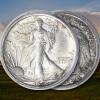
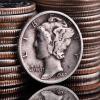
As the series that immediately preceded the Mercury Dime, Standing Liberty Quarter, and Walking Liberty Half Dollar, Barber coins also serve as the natural historical prelude to those iconic designs. Displaying a Barber dime next to a Mercury Dime, or a Barber half dollar next to a Walking Liberty, tells the visual story of how American coin design evolved from conservative classicism to artistic expression in a single generation.
Explore our selection of certified Barber Coins at L&C Coins. With 50 years of experience across all three denominations, we can help you find the right coins for your collection. Questions? Contact our team at 1-800-669-0953 — we are here to help.
About the Author