Buffalo Nickels: The Most American Coin Ever Made

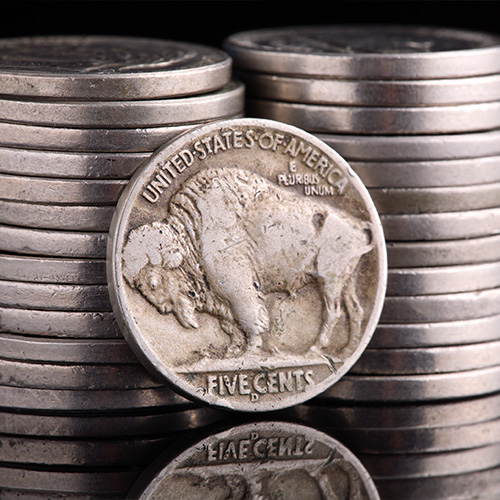
When James Earle Fraser sat down to design the new five-cent piece in 1911, he wanted to create something "truly American." The result, struck from 1913 to 1938, became exactly that—a coin so distinctly tied to the American experience that it remains one of the most recognized U.S. designs more than a century after its introduction.
The Buffalo Nickel—also called the Indian Head Nickel by some collectors—pairs a Native American profile on the obverse with an American bison on the reverse. No design before or since has captured the American frontier so completely in a single coin.
Fraser's Vision
Fraser was a sculptor of considerable reputation when the Treasury Department invited him to design replacements for the Liberty Head Nickel that had been in production since 1883. He had studied under Augustus Saint-Gaudens (designer of the celebrated $20 gold piece) and shared his teacher's commitment to American artistic ambition.
Fraser drew inspiration from his upbringing in the American West. His most famous earlier work, "End of the Trail," depicted an exhausted Native American on horseback and remains one of the most reproduced sculptural images in American art. The same sensibility informed his nickel design.
For the obverse, Fraser combined features from multiple Native American models. Over the years, Fraser identified Iron Tail (Lakota Sioux) and Two Moons (Cheyenne) as two of his subjects, though his recollection of the third model varied across interviews. The composite portrait became one of the most powerful representations of Native American identity to appear on U.S. coinage.
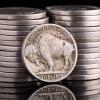
The reverse depicts an American bison. Fraser claimed the model was Black Diamond, a buffalo housed at New York's Central Park Zoo. Whether Black Diamond was the actual model has been debated, but the choice of subject matter resonated. The American bison had nearly been hunted to extinction by the early 1900s, and conservation efforts were just beginning to restore the species.
Type 1 and Type 2: A Quick Design Modification
The first Buffalo Nickels of 1913 depicted the bison standing on a raised mound. Mint officials quickly realized this design caused the denomination "FIVE CENTS" to wear away rapidly through circulation. Within months, the design was modified—the mound was lowered to a flat plain, and the denomination was recessed below.
This created two distinct types within a single year:
Type 1 (1913)
Buffalo on raised mound. Both Philadelphia and branch mint examples were produced before the design change. The 1913-S Type 1 had a mintage of 2.1 million; the 1913-D Type 1 mintage was 5.3 million.
Type 2 (1913-1938)
Buffalo on flat plain with recessed denomination. The 1913-S Type 2 has a mintage of just 1.2 million—making it one of the most coveted issues in the series.
The Date Problem
Despite the modifications, the Buffalo Nickel design had a persistent flaw. The date on the obverse sat on a raised pedestal that wore away faster than surrounding details. After moderate circulation, many Buffalo Nickels became dateless or showed only partial date impressions.
Generations of collectors have pulled dateless Buffalo Nickels from rolls and wondered what they once showed. Acid-restoration products (notably Nic-A-Date) became popular in the mid-20th century to chemically reveal the date on worn examples. While such restored coins are not collectible at full value, they do allow attribution of dates that would otherwise be lost.
Famous Varieties: The Highlights of Buffalo Nickel Collecting
The series produced several of the most famous varieties in U.S. numismatics:
1937-D Three-Legged Buffalo
The most celebrated error in the series. A pressman over-polished the reverse die in an attempt to remove clash marks, inadvertently removing most of the buffalo's front leg. Genuine examples show a clear front leg outline missing while retaining other characteristic details. Authentication is essential—altered coins have been produced for decades.
1918/7-D Overdate
Among the most valuable Buffalo Nickel varieties. A 1917 hub was reused for 1918 production, leaving traces of the prior year visible underneath the 8. Even circulated examples bring strong premiums. Mint State examples are exceptionally rare.
1916 Doubled Die Obverse
Strong doubling visible on the date. While not as widely known as the 1955 Doubled Die Lincoln Cent, the 1916 DDO Buffalo Nickel is similarly dramatic and similarly desirable to specialists.
1913-S Type 2
The lowest-mintage regular issue in the series. Particularly tough in Mint State.
1921-S, 1924-S, 1925-S, 1926-S
Branch mint issues from the 1920s with low mintages and extreme strike weakness. The 1926-S in particular is challenging in any Mint State grade.
Building a Buffalo Nickel Collection
The series accommodates several collecting approaches at varying budget levels:
Type Set
A Type 1 and Type 2 example complete the design's representation. Common-date pieces in pleasing Mint State are accessible to most budgets.
Date Set
With 64 different dates and mint marks, the series presents a meaningful collecting challenge. Most dates are achievable in mid-grade circulated condition; key dates and Mint State examples present greater pursuits.
Mint State Date Set
A genuine challenge, particularly for branch mint dates. Strike quality varies dramatically across the series, with many coins showing weak central detail even in higher Mint State grades.
Variety Set
Specialists pursue major varieties including the 1937-D Three-Legged, 1918/7-D, 1916 DDO, and other lesser-known doubled die and repunched mint mark issues.
Strike and Surface Considerations
Buffalo Nickels are notorious for weak strikes, particularly on branch mint coins from the 1920s. Even Mint State examples may show weak feathers, soft buffalo horn detail, or poorly defined hair. PCGS and NGC consider strike quality when assigning grades, but well-struck coins from typically weak issues command meaningful premiums in private treaty markets.
Toning is an important consideration for collectors. Original surfaces often show attractive russet, blue, or rainbow toning that adds significantly to eye appeal and market value. Conversely, cleaned or improperly stored coins lose collector interest.
Adding Buffalo Nickels to Your Collection
At L&C Coins, we offer certified Buffalo Nickels graded by PCGS, NGC, ANACS, and CACG. Our typical inventory includes type coins for new collectors, date set fillers, key dates when available, and selected varieties for specialists.
Our family business has served collectors since 1974—50 years of experience helping numismatists find the right coins. Every piece carries our 100% authenticity guarantee and 15-day return privilege. Layaway available on substantial pieces ($100 minimum, 20% down, four interest-free payments).
An American Icon
More than 85 years after the last Buffalo Nickel was struck, James Earle Fraser's design still resonates as one of the most distinctly American coins ever produced. The combination of Native American imagery and the bison captures a specific American moment—and a specific American sensibility—that no other coin matches.
Browse our current selection of Buffalo Nickels at L&C Coins. Questions about building your set? Call us at 1-800-669-0953—we're happy to help.
About the Author