Morgan Dollar Value: Key Dates, Carson City Coins, and What Your Morgan Is Worth

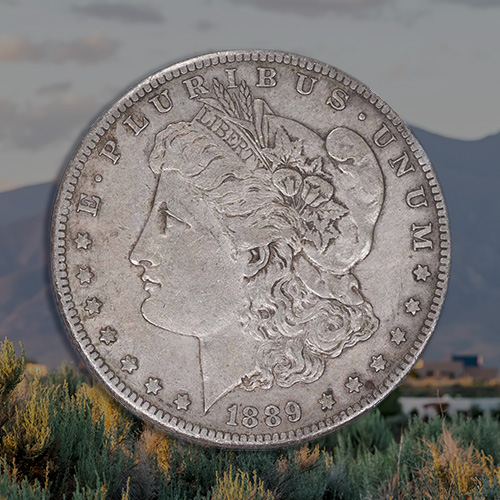
Ask most Americans to picture an old silver dollar and they will describe a Morgan Dollar: Liberty in profile on the front, an eagle with spread wings on the back, a big coin of 90 percent silver that feels heavy in the hand. It is the most collected classic American coin, and the question we hear about it more than any other is a simple one: what is my Morgan Dollar worth? The answer comes down to three things, the date, the mint mark, and the grade. This guide covers all three, then explains the specialties (VAM varieties, toned coins, and the GSA Carson City dollars) that give the series its depth.
The dollar that defined American silver
George T. Morgan, an engraver at the US Mint, designed the coin in 1878. Its timing came from Congress. The Bland-Allison Act of 1878 required the Treasury to buy large amounts of domestic silver and strike it into dollars, and the Western mines were producing silver faster than ever. The new dollar went into production that year and stayed in production through 1904. Then the presses stopped. The design came back for one final year in 1921, and the Peace Dollar took its place.
That 1921 issue was meant to be the last word. It was not. The Mint revived the Morgan Dollar design in 2021 for its centennial, and again in 2026 with Reverse Proof and Enhanced Uncirculated versions, plus a Diamond Field set later this year. A design collectors still want from the Mint more than a century after Morgan cut it has earned its reputation.
Five mints and why the mint mark matters
Morgan Dollars were struck at five mints:
-
Philadelphia. No mint mark.
-
Carson City (CC). 1878 to 1893. The Nevada mint stood close to the Comstock Lode and coined its silver.
-
Denver (D). 1921 only.
To find the mint mark, turn the coin over. It sits on the reverse below the wreath, just above the letters DO in DOLLAR. No letter means Philadelphia.
That small letter matters more than anything else on the coin except the date. Two Morgans of the same year can sell for very different amounts based on where they were struck, because each mint struck different quantities and each mint's coins had a different fate after they left the building.
Key dates and semi-keys
A handful of dates carry the chase in the Morgan series. Here they are, with honest guidance on each.
-
1889-CC. The Carson City key. Scarce in every grade, and a Mint State example is a major coin in any collection.
-
1893-S. The best-known key date in the series and scarce in every grade. Most collectors buy it circulated, and it belongs in a PCGS holder: this is the date that gets altered and counterfeited most.
-
1895. The Philadelphia 1895 is known only as a proof. Collectors who want a complete date set need a proof example, and that makes it one of the most famous coins of the series.
-
1895-O. Available in circulated grades, scarce in Mint State.
-
1901. The classic case of a date that is easy to find circulated and scarce uncirculated. A circulated 1901 is an ordinary set filler. A Mint State 1901 is not.
-
1903-S and 1904-S. Two late San Francisco semi-keys. Neither turns up often, and attractive Mint State examples are harder still.
The first year has its own targets. The 1878 Philadelphia dollars include the 8 Tail Feathers reverse and the 7 over 8 Tail Feathers variety, where the die was re-cut with a seven-feather reverse over the original eight.
Why is a date common in one grade and scarce in another? It comes down to what happened to the coins after they were struck. Millions of Morgans never circulated. They sat in canvas bags in Treasury and Mint vaults for decades and reached collectors uncirculated, which is why so many dates are easy to find in BU. Other dates went straight into circulation and wore down, so the Mint State survivors are few: the 1901 is the clearest example. The reverse also happens. Some Carson City dates survived mostly in government vaults, and the GSA sales of the 1970s put them in collectors' hands uncirculated.
The practical rule: buy the best grade your budget allows for the date you want, and buy the key dates certified.
How grading changes value
Grade is the third variable, and on a Morgan the design tells you where to look. Wear shows first on Liberty's hair above the ear and forehead and on her cheek. On the reverse, check the eagle's breast feathers and the tops of the wings. Four grades cover most of what collectors buy.
-
VF (Very Fine, VF20 to VF35). Moderate, even wear. Some hair detail remains above the ear, and the eagle's breast feathers are worn smooth in the center. The honest set-filler grade for the key dates.
-
AU58 (About Uncirculated). A trace of wear on the highest points only, with nearly full luster. To the naked eye it can pass for Mint State, which is why many collectors consider AU58 the best balance of eye appeal and price.
-
MS63 (Choice Mint State). No wear at all, full luster, and scattered bag marks on Liberty's cheek and in the open fields. The everyday Mint State grade for building a date set.
-
MS65 (Gem). Few marks, none that distract, and strong luster. This is the registry grade and the coin that shows Morgan's design the way he cut it.
How much each step adds depends on the date. On a date that survived in Treasury bags by the thousands, gems are available and the step from MS63 to MS65 is measured. On a date that is scarce in Mint State, the same step can change the price dramatically.
Two designations change the picture further. Some Morgans were struck from fresh dies that left the fields with a mirror-like surface. PCGS designates these PL (prooflike) when the fields reflect clearly, and DMPL (deep mirror prooflike) when the mirrors are deep and the frosted devices stand out against them like a cameo. At the same grade, a PL or DMPL coin brings more than a standard example, and DMPL Morgans are a collecting category of their own.
VAMs, toning, and the GSA hoard
Three specialties give the Morgan series a depth no other classic coin matches.
VAM varieties. Leroy Van Allen and A. George Mallis spent years cataloguing Morgan Dollar die varieties: doubled dates, clashed dies, re-punched mint marks, and the 1878 tail feather varieties. Each one carries a VAM number. PCGS attributes listed VAMs right on its labels, and the Top 100 and Hot 50 lists are the hobby standards specialists build their sets around.
Toned Morgans. Decades in canvas bags and paper envelopes left some Morgans with natural color, from soft gold to deep blues and rainbow bands. Every toned Morgan we offer is PCGS-certified, and the color is judged original by the grading service.
The GSA Carson City dollars. In the 1970s, the General Services Administration sold Carson City dollars that had been held in Treasury vaults to the public, each in a special GSA holder. It was the first time many collectors could own an uncirculated CC dollar, and coins still in their original GSA holders remain a favorite with Carson City collectors today.
Start your Morgan collection
There is no wrong way into the series. A circulated common date is the classic first Morgan and one of the best gifts in the hobby. A Carson City dollar puts the Comstock in your hand. A key date gives the set its anchor, and a PCGS MS65 shows the design at its best. When the Morgan set is done, the Peace Dollar is the natural next chapter, and our 1804 Silver Dollar article tells the story of the most famous silver dollar of all.
We have more than 9,000 Morgan Dollars in stock, the deepest category on our site, from circulated common dates to PCGS-certified gems. Every certified coin ships with its PCGS grade guaranteed. Standard orders ship free by USPS Ground Advantage, every order carries a 15-day return privilege, and layaway is available on in-stock coins over $100: 20% down, four monthly payments, five total, zero interest. Browse Morgan Dollars, or call 1-800-669-0953. We have been selling Morgans as a family since 1974.
About the Author