Walking Liberty Half Dollar Values: Key Dates, Grades, and What Your Coin Is Worth

Ask a room of collectors to name the most beautiful coin the United States has produced and one answer comes back more than any other: the Walking Liberty Half Dollar. Struck from 1916 to 1947, the series carries a design so admired that the US Mint brought it back in 1986 for the American Silver Eagle, where it still appears today. This guide covers what the series is worth, which dates matter most, and how grade changes the picture, drawn from a dealer family that has been grading these coins since 1974.
The Design That Defined American Coinage
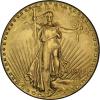
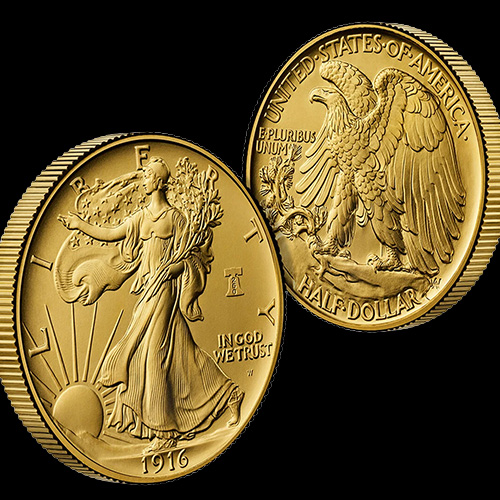
In 1916 the Mint replaced Charles Barber's long-running half dollar with a new design by sculptor Adolph A. Weinman. The obverse shows Liberty in full stride, draped in the American flag, her right arm extended toward the rising sun, laurel and oak branches cradled in her left. The reverse shows an eagle perched on a mountain pine, wings half open, a moment before flight.
The design was praised from the day of release and its reputation has only grown. When the Mint needed an obverse for the American Silver Eagle in 1986, it reached back seventy years to Weinman's Liberty. And in 2026 the design received a new honor: the Best of the Mint 1916 Walking Liberty Half Dollar Gold Coin and Silver Medal Set gives the original its first strike in gold. PCGS-certified examples of the gold set are in stock now at L&C Coins alongside the original silver series it celebrates.
Key Dates and What Makes Them Scarce
Five dates anchor the series. Each is scarce for its own reason, and knowing the difference between circulated and Mint State examples matters more here than almost anywhere else in the series.
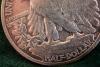
1916-S. The first-year San Francisco issue, with a mintage of 508,000. The 1916 coins and some early 1917 issues carry the mint mark on the obverse below the motto, a placement unique to the opening of the series and prized by collectors. Honest circulated examples bring several hundred dollars. Mint State pieces climb well into four figures, and gems have sold for far more.
1921. Philadelphia struck just 246,000 half dollars in 1921, the lowest Philadelphia mintage of the series. Even heavily worn examples command real money, and Mint State survivors are genuinely rare.
1921-D. The king of the series by the numbers: 208,000 struck, the lowest mintage of any Walking Liberty Half Dollar. Demand for this date runs deep in every grade.
1921-S. A larger mintage at 548,000, but the coins went straight into circulation and stayed there. In worn grades the 1921-S is obtainable. In Mint State it is widely considered the most difficult coin in the entire series to find, and gem examples rank among the great condition rarities in American silver coinage.
1938-D. Denver struck 491,600 in 1938, and word of the low figure got out. Collectors and dealers set rolls aside, so Mint State examples survive in fair numbers. The date is a key by mintage and an approachable one in high grade, which makes it a favorite first key date for set builders.
A note of honest guidance: for the 1921 dates in particular, the gap between a circulated coin and a Mint State coin is enormous, in both scarcity and price. A collector deciding between one Mint State key and several nice circulated keys is making a real choice, and there is no wrong answer. It depends on how you want to build.
How Grading Changes Value
Grade drives value across the series, and the effect compounds on better dates. Here is how the same design reads at four grade levels, illustrated with PCGS-certified coins from our current inventory.
VG8, Very Good. The full outline of Liberty is present and the rims are complete. The flag drapery and the eagle's feathers are worn smooth. Common dates at this level are the affordable raw material of circulated set building.
XF45, Extremely Fine. Light wear on the high points only. The flag lines cross Liberty's body, the sun's rays are separated, and the eagle shows real feather detail. This is the grade where the design starts to look the way Weinman drew it.
MS63, Choice. No wear at all. Full luster with scattered contact marks from the minting and bagging process. For most dates this is the sweet spot between quality and price.
MS65, Gem. Strong strike, clean surfaces, unbroken luster. On common dates a gem is an affordable way to own the design at its best. On key dates a gem is an event.
Every certified coin we sell is graded by PCGS, NGC, ANACS, or CACG, and each listing states the service and grade plainly. When two coins carry the same date and different prices, the grade on the holder is almost always the reason.
The Short Set: Where Most Collectors Start
The full 65-coin series is a long road, and the 1921 dates make it a steep one. That is why generations of collectors have started with the short set: the twenty coins struck from 1941 through 1947.
Every date and mint mark in the short set is affordable in circulated grades, and all twenty can be found in MS63 to MS65 without any single coin breaking the budget. The result is a complete, satisfying collection of the most admired design in American coinage, finished in months rather than decades, and a natural stepping stone toward the earlier dates. Many of the finest full sets we have handled began exactly this way.
Where to Go From Here
The Walking Liberty Half Dollar rewards every kind of collector. The short set offers a clear starting point. The key dates offer a lifetime of pursuit. And this year, for the first time, the design exists in gold through the Best of the Mint set.
We currently have nearly 2,000 Walking Liberty Half Dollars in stock, from honest circulated set fillers to PCGS-certified gems, plus the new gold set for the collector who wants the design's newest chapter. Every certified coin ships with its grade guaranteed, shipping is free on standard orders, and our 15-day return privilege backs every purchase. Browse the Walking Liberty Half Dollar category, or call us at 1-800-669-0953 and talk it through with a collector.
About the Author