Buffalo Nickel Values: Key Dates, Famous Varieties, and What Yours Is Worth

Somewhere in America right now, someone is looking at a Buffalo Nickel pulled from a drawer and wondering what it is worth. It happens every day, and the answer runs anywhere from a few cents to six figures. This guide covers where your coin falls in that range: the key dates, the famous varieties, and the two details on the coin itself, the horn and the date, that tell most of the story.
The Most American Design Ever Struck
When James Earle Fraser sat down to design a new five-cent piece in 1911, he set out to create something truly American. Fraser had studied under Augustus Saint-Gaudens and grew up in the American West; his sculpture "End of the Trail" remains one of the most reproduced images in American art. That same sensibility shaped the nickel.
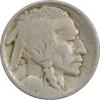
For the obverse, Fraser combined the features of several Native American models into one portrait. He named Iron Tail of the Lakota Sioux and Two Moons of the Cheyenne among his subjects. For the reverse he modeled an American bison, by his account Black Diamond of New York's Central Park Zoo. The pairing was unlike anything on American coinage before or since, and the coin, struck from 1913 to 1938, became an icon almost immediately. Some collectors call it the Indian Head Nickel; the catalog term is Buffalo Nickel, and both names point to the same 26-year series.
Type 1 and Type 2: The First Year Split
The first 1913 coins show the bison standing on a raised mound, with FIVE CENTS on the mound's face. The Mint realized within months that the denomination sat too high and wore away fast in circulation. The fix came mid-year: the mound became a flat plain and the denomination moved into a recessed area below it.
That split created two collectible types in a single year. Type 1 coins exist from all three mints and are affordable in pleasing grades, which makes them a favorite type coin. The 1913-S Type 2 is another matter: 1.2 million struck, the lowest regular-issue mintage of the series, and a coin every date collector eventually has to face.
Why So Many Buffalo Nickels Have No Date
Fraser placed the date on a raised area that wore down ahead of the rest of the design. After a decade or two in circulation, millions of Buffalo Nickels lost their dates entirely. Generations of collectors have pulled dateless examples from change and wondered what they once read.
A mid-century product called Nic-A-Date used acid to raise the ghost of a worn date. It works, and it permanently etches the coin. Restored-date coins can be attributed but sell for a small fraction of a natural example, so the date rule is simple: a Buffalo Nickel with a full, natural date is always the better coin, and on the scarce issues the difference is dramatic.
Key Dates and Famous Varieties
Five regular issues and three varieties drive the series.
1913-S Type 2. The mintage king at 1.2 million. Worn examples with clear dates bring real money, and Mint State pieces are a serious pursuit.
1921-S. Just over 1.5 million struck, and most went straight into circulation. In Mint State it is one of the toughest coins in the series. A gem sold for $125,350 at auction in 2008 speaks to the level; that result belongs to its sister issue, the 1918-S, and the 1921-S runs in the same company.
1924-S and 1926-S. Low-mintage San Francisco issues from the 1920s, struck weakly as a rule. The 1926-S, at 970,000 coins, has the lowest mintage after the 1913-S Type 2 and is a challenge in any Mint State grade.
1918/7-D Overdate. A 1917 hub was reused for 1918 production, leaving the 7 visible under the 8. Even heavily worn examples bring four figures, and an uncirculated example sold for $350,750 in 2006.
1916 Doubled Die Obverse. Strong doubling on the date, dramatic under a loupe and scarce in every grade. Less famous than the 1955 Lincoln Cent doubling, and prized by the specialists who know it.
1937-D Three-Legged. The celebrity of the series. A pressman polished clash marks off a reverse die and took most of the bison's front leg with it. One sold for $88,125 in 2015. Authentication matters more here than anywhere else in the series: altered coins have circulated for decades, and every Three-Legged example we sell is certified by PCGS, NGC, ANACS, or CACG.
An honest note on the rest of the series: most dates from the 1930s are common and affordable, even in Mint State. A worn common date with no date visible is worth little. The value concentrates in the keys, the varieties, and full-detail examples of every date.
How Grading Reads on a Buffalo Nickel
Two details do most of the grading work: the bison's horn and the date. Here is how the same design reads at four grade levels, illustrated with certified coins from our current inventory.
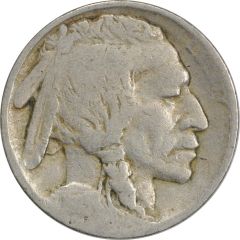
G4, Good. Full rim, readable legends, partial or worn date, no horn. The honest pocket-change survivor. Common dates at this level are inexpensive; keys still bring solid prices with a readable date.
F12 to VF20, Fine to Very Fine. Full date, partial horn. The middle of the market and the sweet spot for circulated date sets.
XF45, Extremely Fine. Full horn, light wear on the high points only, the portrait and hide showing real detail. The grade where Fraser's design starts to look the way he modeled it.
MS64 to MS65, Mint State. No wear, full luster. One caution unique to this series: branch mint coins of the 1920s were often struck weakly, so a Mint State coin can still show a soft horn or flat hide from the strike, not from wear. Sharply struck examples of those dates sell for more than their grade alone suggests, and original toning in russet and blue adds eye appeal collectors compete for.
Every certified coin we sell states its grading service and grade plainly, and when two coins of the same date carry different prices, the grade on the holder, and the strike behind it, is almost always the reason.
Three Ways to Collect the Series
The type set. One Type 1 and one Type 2, both available in attractive Mint State for a modest outlay. Two coins, the whole design story.
The date set. All 64 date and mint mark combinations, achievable in circulated grades with the keys as the long-term chase. This is the classic path, and the one that teaches the series best.
The variety set. The Three-Legged, the overdate, the doubled die, and the lesser-known repunched mint marks. A specialist's road, and one where certification is non-negotiable.
What Is Yours Worth?
Start with the date. If it is natural and full, check it against the keys above. Then look at the horn. A full horn on any date means a collectible coin, and a full horn on a key date means it is time to call a dealer.
We currently have more than 2,000 Buffalo Nickels in stock, from honest circulated set fillers to PCGS-certified gems, with key dates and famous varieties when available. Every certified coin ships with its grade guaranteed, shipping is free on standard orders, and our 15-day return privilege backs every purchase. Browse the Buffalo Nickel category, or call 1-800-669-0953 and talk it through with a collector.
About the Author