How PCGS Certification Works: Grading, Slabs, and What the Label Tells You

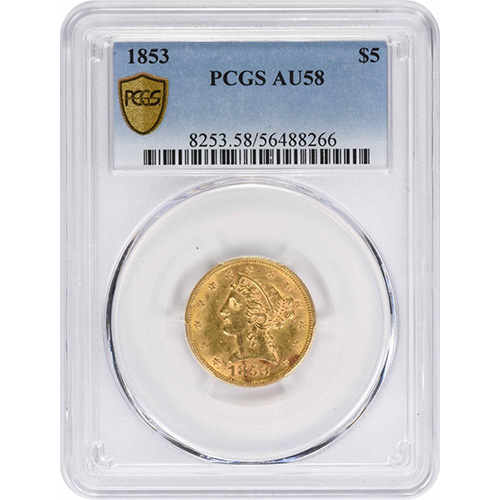
Every certified coin we sell arrives in a sealed plastic holder with a printed label. The label carries a date, a denomination, a grade, and a number. Collectors who have been at this a while read that label at a glance. If you are newer to it, here is what all of it means and why it exists.
The Problem Certification Solved
Before third-party grading, a coin's condition was a matter of opinion, and the opinion that mattered most belonged to whoever was selling it. Two dealers could look at the same Morgan Dollar and describe it differently, and a buyer four states away working from a mail order catalog had no way to settle the question.
That is the environment the founder of this business started in back in 1974, working from printed catalogs advertised in Coin World. It worked because reputation carried the weight. It also limited how far a coin market could reach.
PCGS was founded in 1986 to remove the seller from the equation. The proposition is simple: an independent company with no stake in the transaction examines the coin, authenticates it, assigns a grade, and seals it in a tamper-evident holder. The grade becomes a fact about the coin rather than a claim by the person selling it.
The 70-Point Scale
Grading uses the Sheldon scale, which runs from 1 to 70. It originated in the 1940s as a pricing formula for large cents, and the formula part was abandoned long ago, but the numbers stuck and became the standard.
Circulated grades, 1 through 58:
- PO1 Poor. Barely identifiable as to type and date.
- FR2 Fair, AG3 About Good. Heavy wear, major outlines only.
- G4 to G6 Good. Major features clear, rims worn into the lettering.
- VG8 to VG10 Very Good. Design visible throughout with heavy wear.
- F12 to F15 Fine. Moderate wear, some interior detail.
- VF20 to VF35 Very Fine. Light to moderate wear, most detail present.
- XF40 to XF45 Extremely Fine. Light wear on the high points only.
- AU50 to AU58 About Uncirculated. Trace wear, often only on the highest points.
Uncirculated grades, 60 through 70:
MS60 through MS70 for business strikes, PF60 through PF70 for proof coins. These coins show no wear at all. What separates an MS62 from an MS67 is contact marks, luster quality, strike, and eye appeal rather than circulation.
An AU58 and an MS61 are worth noticing side by side. The AU58 has a whisper of wear but may look better to the eye than a heavily bagmarked MS61. Grade is not the same thing as attractiveness, and experienced collectors buy the coin rather than the number.
PCGS uses XF for Extremely Fine and PF for Proof. NGC uses EF and PR for the same grades. They mean the same thing.
Reading a PCGS Label
Top to bottom, a PCGS label carries:
Date, mint mark, and denomination. 1881-S $1 identifies an 1881 Morgan Dollar struck at San Francisco.
Variety or designation, where it applies. VAM numbers on Morgans, FS numbers from the Cherrypicker's Guide, or strike designations like FH for Full Head on a Standing Liberty Quarter, FB for Full Bands on a Mercury Dime, and FBL for Full Bell Lines on a Franklin Half Dollar.
The grade. MS65, PF69DCAM, XF45.
Color, on copper. RD, RB, or BN for red, red brown, and brown.
The certification number. A unique number tied to that specific coin. Enter it at pcgs.com/verify and you get back the coin's details and confirm the holder matches what PCGS actually graded. Anyone can do this in about ten seconds, and anyone buying a certified coin sight unseen should.
Population data, available through the certification lookup rather than printed on the label. This tells you how many examples PCGS has graded at each level for that date and mint.
Details Grades
Not every coin graded gets a number. A coin that is authentic but has a problem receives a Details grade instead: the level of detail is stated, followed by the issue.
Common ones include Cleaned, Damaged, Environmental Damage, Scratched, Bent, Altered Surfaces, and Repaired.
Cleaned is the one that surprises people most. A coin polished or dipped to brighten it leaves microscopic hairlines that a grader sees under magnification, and the coin is graded as cleaned no matter how good it looks to the naked eye. This is why the standing advice in the hobby is absolute: do not clean a coin. Ever.
A Details coin is still a real coin and is still collectible, particularly for a key date where a problem-free example is out of reach. It is simply documented honestly.
The Other Services
PCGS is not alone, and the four names you will see on holders are worth knowing.
PCGS. Founded 1986, the service we certify with and name on our graded material.
NGC. Founded 1987, the other major service, with broad international coverage.
ANACS. The oldest of the group, originally run by the American Numismatic Association, widely used for varieties and error coins.
CACG. The newest. CAC began by reviewing coins already graded by PCGS and NGC and applying a green sticker to those it judged solid or better for the assigned grade. In 2023 it launched its own full grading service, encapsulating coins in CACG holders from scratch.
All four use the Sheldon scale, which is what makes grades comparable across holders.
When Certification Makes Sense
Certification costs money and takes time, so it is not the right answer for every coin.
It is worth it for: key dates and rarities, anything where authenticity is a live question, coins worth enough that a grade difference is meaningful, gold, and coins you intend to sell to someone who cannot examine them in person.
It is usually not worth it for: common dates in circulated grades, coins whose grading fee would approach their value, and coins you are collecting for the design rather than the grade.
Plenty of excellent collections are built entirely from raw coins in albums. Raw is not a lesser way to collect; it is a different one, with lower cost and a more direct relationship to the coin itself. What certification buys you is documentation and the ability to transact at distance with confidence.
How We Handle It
We name PCGS on our graded material. For coins we sell uncertified, our numismatists grade in house against American Numismatic Association standards, and we describe them as we find them. Our family has been doing this since 1974, and the combined experience behind the counter runs to about 90 years.
Every coin we sell is guaranteed authentic. Certified coins carry their PCGS grade, and you can verify any certification number before or after your coin arrives.
Questions about a grade, a holder, or a coin you already own? Call us at 1-800-669-0953.
About the Author