Indian Head Cent Guide: Key Dates, Grading, and What Collectors Look For

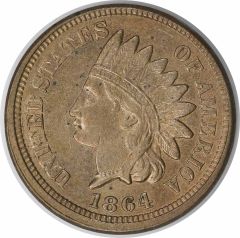
The Indian Head Cent ran for fifty years, from 1859 to 1909, which means it circulated through the Civil War, Reconstruction, the closing of the frontier, and the arrival of the automobile. Somebody carried one of these into a shop the week Lincoln was elected. Somebody else spent one the year the Wright brothers flew.
It is also the coin people most often find in a family estate and want to know about. If you have an Indian Head penny in a drawer and you are wondering what you have, this guide covers the series from the beginning: what to look at, which dates matter, and how condition changes the answer.
The Design and the Woman Who Was Not an Indian
James Barton Longacre was Chief Engraver of the US Mint when the design was adopted, and the story that has followed it around for a century and a half is that he modeled Liberty on his daughter Sarah wearing a headdress. That story is almost certainly not true. The likelier source is a classical bust in the Philadelphia Mint collection combined with Longacre's own study of Greco-Roman Liberty figures, dressed in a Native American war bonnet.
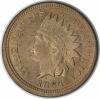
Either way, the result is one of the more distinctive obverses in American coinage: Liberty in profile facing left, wearing a feathered headdress with LIBERTY across the band.
The reverse changed once. Coins struck in 1859 carry a plain laurel wreath. Beginning in 1860 the wreath became oak with a shield above it, and that design carried through 1909. The single-year laurel reverse makes 1859 a distinct type coin, which matters to type collectors more than date collectors.
Composition changed too. From 1859 to 1864 the cents were struck in copper-nickel, a thicker, paler coin collectors call white cents. In 1864 the Mint switched to bronze, and that thinner, redder composition ran to the end of the series.
The Key Dates
Five dates carry the series. Everything else in the run is obtainable with patience.
1877. The one everybody names. Mintage of 852,500, the lowest of the series by a wide margin, struck during a depression when the Mint had little reason to make cents. Scarce in every grade, and heavily counterfeited, which is why certification matters more on this date than any other in the series.
1909-S. Mintage of 309,000, the only Indian Head Cent with the S mint mark besides the 1908-S. The final year of the series and the first year San Francisco struck cents at all.
1908-S. The first S mint Indian Head Cent, with a mintage a little over one million. Easier than the 1909-S but still a date collectors have to go looking for.
1872. The lowest mintage of the 1870s bronze issues and difficult in higher circulated grades.
1864-L. In 1864 Longacre added his initial L to the ribbon on Liberty's headdress. Coins struck with the L are a separate and scarcer variety from those struck without it in the same year. Look at the ribbon end under magnification; the letter sits on the ribbon just behind the neck.
Two more worth knowing: the 1871 and 1869 issues are consistently harder than their mintages suggest, because survivors in collectible grades are thin.
Reading the Grade
Indian Head Cents wear in a predictable order, and knowing the order tells you where a coin sits before anybody puts a grade on it.
The diadem and LIBERTY. The band across Liberty's headdress carries the word LIBERTY, and it is the single most useful wear indicator on the coin. On a heavily worn cent the word is gone entirely. Partial letters put the coin in the Good to Very Good range. All the letters visible but weak reads Fine. Sharp and full puts you in Very Fine or better.
Feather tips. The individual feathers in the headdress separate and sharpen as the grade climbs. Flat feathers with no separation indicate a well-circulated coin.
The reverse shield and wreath. Detail in the shield lines and the veins in the oak leaves holds up longer than the obverse detail, so a coin with a strong reverse and a weak obverse is normal rather than unusual.
Color, for uncirculated coins. Bronze cents are graded with a color designation: RD for red, meaning the coin retains most of its original mint color, RB for red brown, and BN for brown. A PCGS-certified MS65RD and an MS65BN are the same numerical grade with a different surface story behind them, and collectors treat them as distinct.
What Changes the Answer on Value
Two questions decide almost everything about an Indian Head Cent, and neither one is the date by itself.
Condition. A common date in Good condition and the same date in MS65RD are separated by an enormous distance. On this series, grade does more work than rarity for the majority of coins.
Surfaces. Corrosion, cleaning, and environmental damage are common on cents this old because copper reacts to everything. A cleaned coin, one that has been polished or dipped to look brighter, is identifiable to a grader and is treated as damaged rather than as its apparent grade. This is the most frequent disappointment we see when someone brings in a family coin: not the date, the surfaces.
Which brings up the rule every collector learns eventually. Do not clean a coin. Ever. The instinct to make it shine is the single fastest way to remove what makes it collectible.
Building a Set
The Indian Head Cent is one of the most approachable classic series to collect completely, and there are three common approaches.
Date set in circulated grades. Every date from 1859 to 1909 in Good to Very Fine. The five key dates are the expensive part; the rest of the run is attainable. This is where most collectors of the series start.
Type coin. One 1859 laurel reverse, one copper-nickel from 1860 to 1864, and one bronze from 1864 to 1909. Three coins, and the series is represented properly in a type set.
Mint State run. The later dates from the 1880s onward exist in quantity in uncirculated grades, which makes a high-grade partial set realistic. Certified RD examples are where collectors focus here.
Indian Head Cents at L&C Coins
We carry Indian Head Cents across the full run, from honest circulated examples for set builders to PCGS-certified Mint State coins with color designations. Our numismatists grade uncertified coins in house against ANA standards, and every coin we sell is guaranteed authentic.
Free shipping on standard orders and a 15-day return privilege. Questions about a specific date or a coin you already own? Call us at 1-800-669-0953.
About the Author